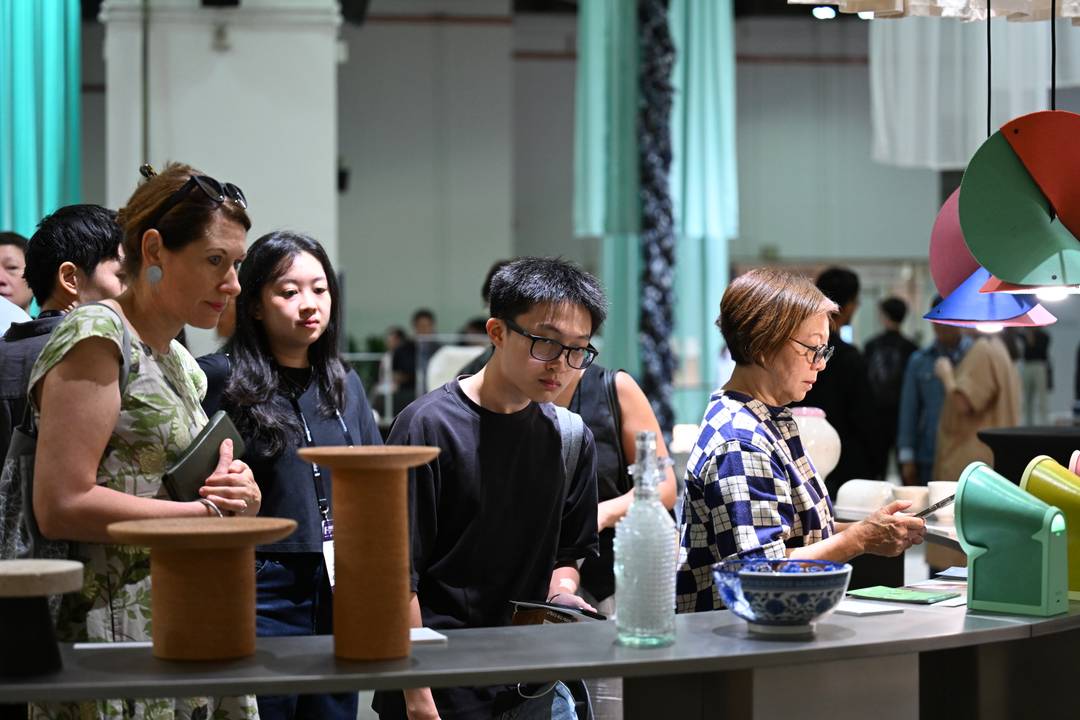
Bangkok, Thailand—FIND – Design Fair Asia 2026 will bring international furniture, interiors, and design brands together with architects, interior designers, developers, hospitality professionals, and procurement teams shaping Southeast Asia’s built environment.
Taking place from 26–28 November 2026 at the Queen Sirikit National Convention Center (QSNCC), the fifth edition of FIND will connect the international design community with one of Asia’s most dynamic markets for hospitality, property, and design.
The event arrives at a significant moment for Thailand’s built environment. More than 16,000 hotel rooms are currently in Bangkok’s construction pipeline, creating opportunities across furniture, lighting, surfaces, kitchens and bathrooms, decorative products, and interior solutions.
Growth extends well beyond hospitality. Thailand is an important market for branded residences, luxury retail, mixed-use developments, and wellness-led destinations. The country accounts for approximately 26% of Asia’s launched branded-residence supply, with inventory valued at around THB205 billion (US$6.4 billion). Its luxury retail market is valued at approximately US$4.4 billion and projected to grow by around 5% annually through 2028 (CBRE).
Geographically, Thailand sits at the heart of mainland Southeast Asia, connecting established and emerging markets across the region. Bangkok’s position as a major business, aviation, and hospitality hub gives FIND a natural platform where international brands can engage not only with Thailand, but with the wider Southeast Asian design and project community.
FIND works closely with leading industry organisations including the Thailand Interior Designers’ Association (TIDA) and Thai Furniture Association (TFA), amongst other key industry groups. TIDA is featuring the Thailand Interior Design and Art by TIDA (TIDA by TIDA), with a centerpiece exploring “Thainess” under the concept “The Sanctuary of Flavours”. It will feature “The Orbit of Awareness” by Badintra Balankura of Context Studio, winner of TIDA’s Wellness Design Challenge “Sensory +1: Reimagine Longevity”, presented as a spatial experience at FIND.
Intellectual Capital: The FIND Global Summit
Complementing the exhibition floor, the FIND Global Summit forms the intellectual centrepiece of FIND 2026, bringing together 70+ speakers across architecture, interiors, hospitality, property, and the wider built environment. The programme will be shaped around three Global Summit pillars, reflecting some of the most significant conversations influencing design across Asia today:
The Asian Design Authority | Beyond the Blueprint
Asia as a design vanguard rather than a canvas for imported influence: a mature ecosystem where international studios serve local authorship rather than dictate it.
The New Vernacular | Salvaged. Engineered. Reauthored.
Southeast Asia is reusing and adapting existing structures and materials, combining heritage, new technology, and circular design to shape the next generation of cultural, luxury, and mixed-use projects.
Asia’s Sensory Sanctuaries | A Way of Living
How the region’s sensory and material language shapes experience well beyond the hotel room, into wellness, branded living, and experiential interior architecture.
From International Practice to Local Authorship
The opening day, Authorship, Experience & A New Way of Living, begins with the question of who writes the brief. Shao-wei Huang, Associate Director and Head of the Shenzhen Office at ZHA, delivers the Summit’s opening keynote, “Designing Beyond Boundaries”, on architecture, intelligence, and human experience in a new era.
Afterwards, “Global Expertise, Local Soul: The Future of Authentic Regional Design” gathers Christin Castillo, Principal at HBA Indonesia, JoonSuk Suh, Managing Principal at HBA Seoul, and Sabine Beck, Partner at HBA, in a conversation moderated by Thomas Meier, Design Director at HBA Bangkok, on how an international practice can work across cultures while keeping the identity of a place intact.
The day closes in a material register. The TIDA keynote panel “Salvaged, Woven, Reauthored: Material, Reuse and Craft” brings Korakot Aromdee of Korakot International and Decha Archjananun of THINKK Studio into dialogue with Massimo Iosa Ghini on how material intelligence and craft can produce a contemporary language that still belongs to its place.
Hospitality Moves Beyond the Hotel
Between these bookends, hospitality—and the shifting definition of luxury—runs as a continuous thread. “Beyond Wellness: The Rise of the Longevity Economy” brings together Nida Wongphanlert, Lydia Tiasiri, Director of Design & Chief Sustainability Officer at Fenn Designers, and Viona Zhang of C9 Hotelworks to ask where wellness is creating genuine value for hotels, residences, and mixed-use destinations, and where the market is heading next. A companion panel, “Where Hospitality Meets Healthcare: Designing for Care and Longevity”, follows the guest into clinical environments with Diana Kraemer, Chief Wellness Officer at The Longevity Suite Asia and Founder of DK Wellness.
In “The Luxury of Constraint”, Stéphane Lombard of Accor, Alan Barr, Founder of greymatters, Francisco Nicolas, Design Director at Aedas Hospitality, and Lionel Teh of WATG, in conversation with Sanjog Modgil, Managing Director – Asia Pacific at SNS Group, examine how tighter budgets, brand standards, existing buildings, and local context are redrawing what gets designed, and what actually gets built. “What Makes a Journey Worth Retelling?”, with Stefan Bruns, General Manager of DTH Travel Thailand / Blue Jasmine Train, Worapan Klampaiboon, Founder of Supergreen Studio, and Chalida Sirikhunwong, Founder & Owner of Baan Chomprang, considers how culture and design turn a stay into a memory.
In the fireside conversation “When Wellness Moves In”, Viri Kaur Chopra of Six Senses traces how principles developed in hospitality are entering the home, quietly rewriting expectations of how people live.
From Buildings to Places
The second day widens the frame from the single building to the city. After Richard Wood’s keynote—an exploration of how design can create the conditions for spontaneity, curiosity, and shared experience—“Can Retail Design the Next Cultural District?” brings Ian Hendricks of Central Pattana together with Natalie Chelliah, Associate Director (Interior) at Concept i, to ask whether commercial development can move beyond transaction towards lasting civic and cultural value, and how retail mix, placemaking, and experience bring people back. In his keynote “Designing with AI to What (Long-Term) Depth”, Garett Hwang of UNStudio then looks beyond the promise of speed to ask where AI genuinely adds value to architecture, and where human judgement must remain firmly in place.
The afternoon turns to the city. “Culture as Infrastructure: Designing Cultural Spaces That Shape the City” brings together Stefano Rabolli Pansera, Founder of Bangkok Kunsthalle and Khao Yai Art Forest, with fellow thought leaders to ask whether art spaces and institutions can become lasting urban infrastructure rather than isolated destinations. The day then closes with a TIDA keynote by Kulapat Yantrasast, Founder of WHY Architecture, whose museum work spans the United States and Asia. In “The Future of Museum Design”, he sets out how the museum is evolving from a “temple of art” into an open, inclusive public space.
Making is given its own stage. “Furniture Made in Asia: Rethinking the Materials Behind It” brings Jirawat Tangkijngamwong, President of the Thai Furniture Association and CEO of DEESAWAT, together with designer Eugenio Hendro to explore how material choices shape the design, durability, and footprint of furniture made in the region. “Active Spaces: How Design Shapes Performance and Wellbeing at Work”, with Deni Davis, General Manager of C&R Thailand, turns to the contemporary workplace. In “Beyond the Horizon: How Experiential Design Is Shaping the Future”, Krid Kusumawalee of Seibu Prince Hotels & Resorts and Arunwan Chantanavicharn of Narai Hospitality Group, moderated by Khachornsak Tuntisook of Kristina Zanic Consultants, explore how destination hotels create a sense of place where little or none existed.
Asia, From Within
The final day turns the lens on the region itself, opening with the TIDA Thesis Awards 2026, which celebrate the next generation of Thailand’s interior design community.
“One Profession, Many Rulebooks: Practising Architecture Across Asia”, presented by AIA Hong Kong and AIA Southeast Asia, brings together Ed Gaskin of ZHA, J Lee Rofkind, Cathy Saldaña, and Manon Koestoer to consider what it takes to practise across a region of radically different markets, cultures, and client expectations. The Summit closes with “Beyond the Blueprint: Future Nostalgia in Architecture”, in which Prof. Kulthida Songkittipakdee, Vice President of the Association of Siamese Architects under Royal Patronage (ASA), and Jenchieh Hung, co-founder of HAS design and research, explore how architecture might draw on cultural memory, nature, and local ways of living and reinterpret them for today.
Thailand’s own creative community is present throughout. The TIDA panel “Crafting Spaces, Threading Narratives” brings together Nichepak Torsutkanok of ease studio and Charif Lona of Studio Act of Kindness. “Form, Light & Emotion: Sculpting Sensory Atmospheres” gathers Nuttapol Techopitch of Looklen Architects, Ekaphap Duangkaew of EKAR, and Bernhard Bstieler of Inverse Lighting Design. Somchai Jongsaeng of DECA Atelier delivers the TIDA keynote “Architecture from Within: Crafting Mindful Spaces & Sensory Sanctuaries”. The cross-sector “Design Forecast 2027: What’s Next for the Places We Live, Work, Shop & Play”, with Saran Yenpanya of 56thStudio and Marina Almeida of Populous, moderated by Haziq Ariffin of ING Media, looks to the year ahead.
This dialogue between international and Thai perspectives is central to FIND’s Bangkok edition: not a division between “global” and “local”, but a programme designed to put them in the same conversations.
Connecting Buyers and Brands
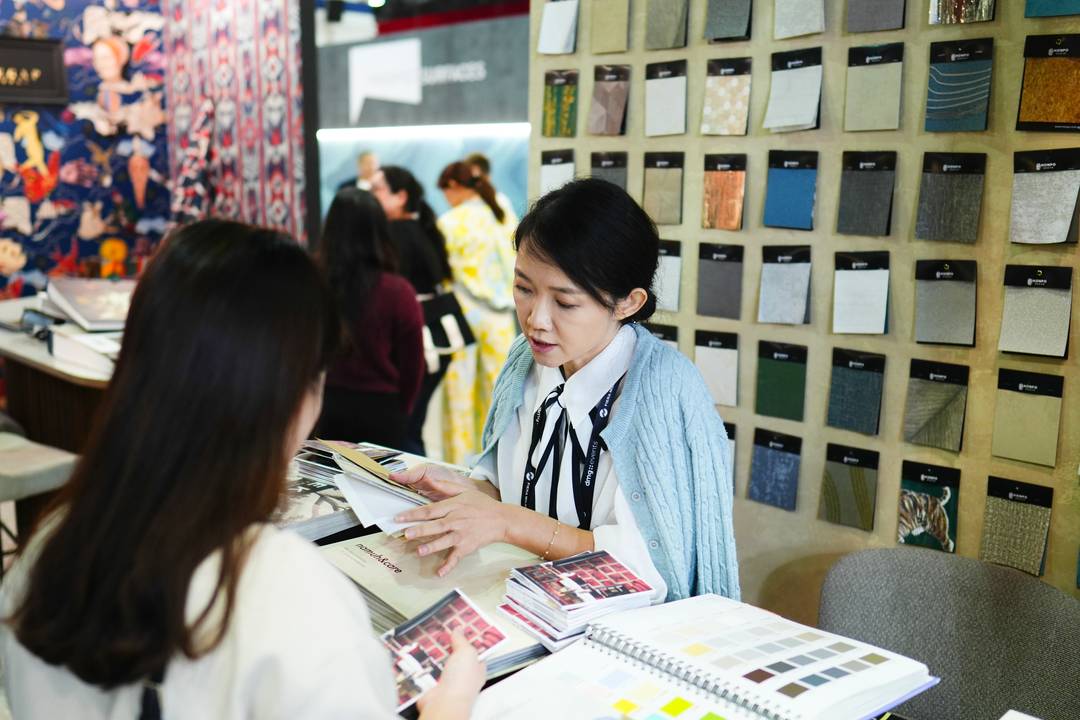
Alongside the exhibition and Summit, the VIP Buyer Programme connects qualified buyers with exhibitors through curated, pre-scheduled meetings. Focused on professionals with active projects and sourcing requirements, the programme is designed to turn discovery at FIND into meaningful specification, procurement and business opportunities.
FIND – Design Fair Asia 2026 takes place from 26–28 November 2026 at QSNCC, Bangkok. Get your free trade visitor pass here and visit the FIND website to learn more.