
Forested Future—a conceptual design exhibition spotlighting sustainable American hardwoods— officially opened on 29 October 2026 at the historic Brunner Mond Building in Shanghai, China.
Supported by the American Hardwood Export Council (AHEC) and curated by Cooollect, the show draws on the documentary Forested Future. It recreates an urban forest, guiding visitors through a narrative arc from seed germination and forest stewardship to handcrafted hardwood creations. Merging botanical displays, woodwork, lighting, shadows, and soundscapes, the exhibition offers a captivating, immersive journey into sustainable American hardwood culture.
The exhibition will run until 17 November. Within this century-old building on the Bund, the vast hardwood forests of North America, conveyed through the textures, sounds, scents, and warmth of wood, alongside the stories of those who safeguard them through sustainable forest management, await a fresh discovery.
On the afternoon of 27 October, iTSLab, one of the exhibition’s co-creation teams, staged a forest-inspired musical performance, marking a poetic start to the opening ceremony.
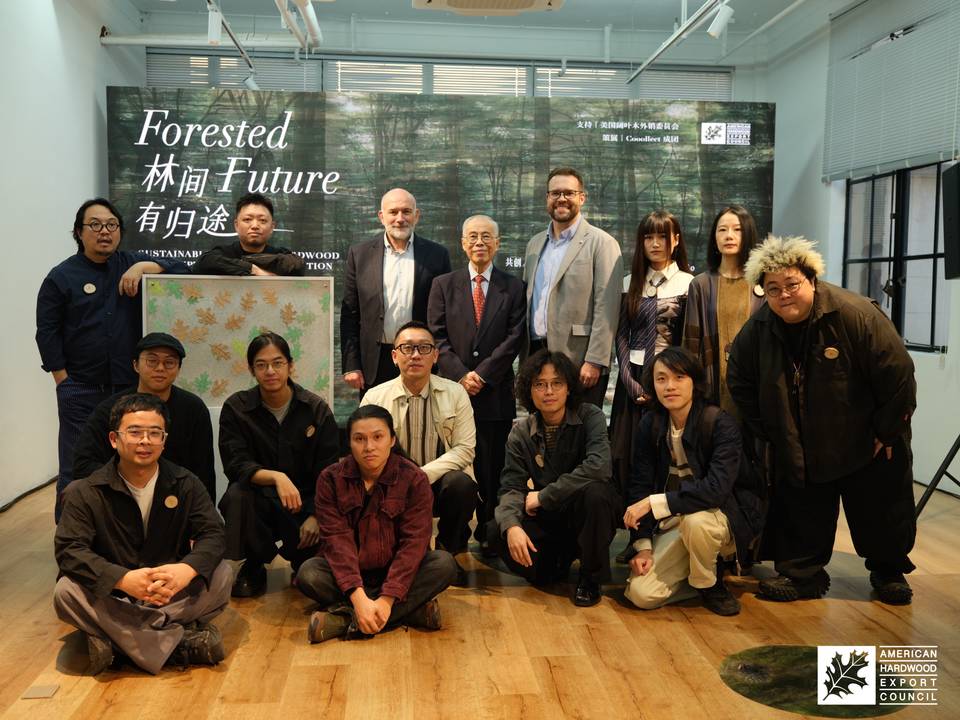
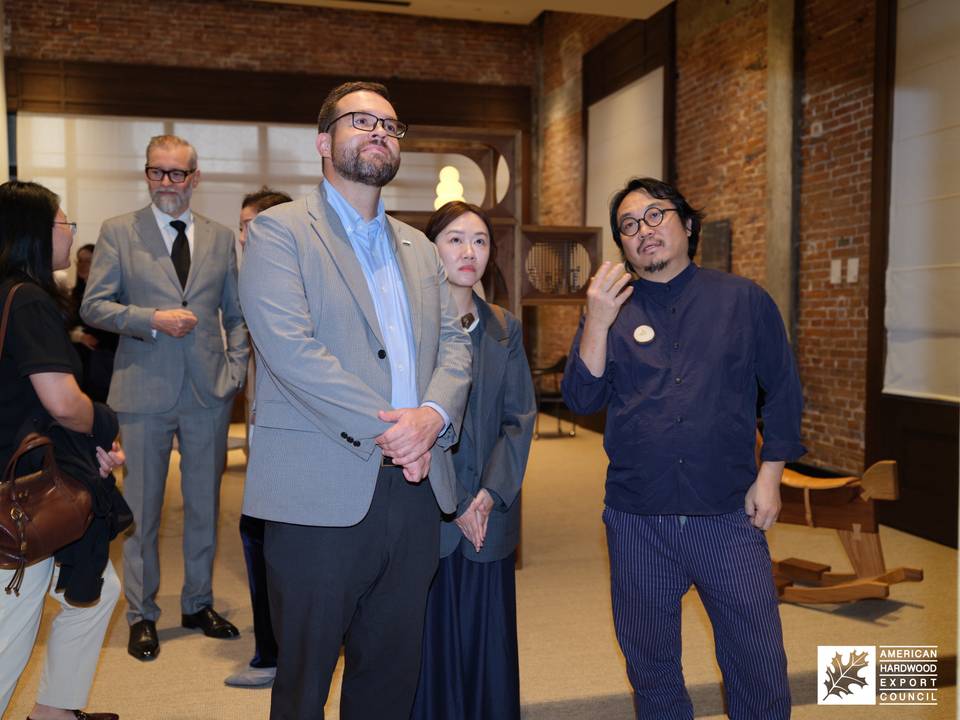
The event welcomed distinguished guests, including Alexander Blamberg, Director of the Agricultural Trade Office in Shanghai; John Chan, AHEC Regional Director for Southeast Asia and Greater China; and Rupert Oliver, AHEC Director of Environmental Policy. Also in attendance were floral artist Wang Zi; designer Hou Zhengguang; multimedia art collective TAG Studio; core co-founders from the collaborative team iTSLab, Zhang Cheng’er and Vinci Xu; and representatives from ten participating home furnishing labels. Industry professionals from design, construction, and timber fields, together with nearly 40 media representatives, gathered for the launch. Industry professionals from the design, construction, and timber fields, together with nearly 40 media representatives, gathered for the launch.
During the ceremony, VIP guests and co-designers embedded pieces of American hardwood leaves into a forest map, symbolising that science-based forest management helps preserve ecological diversity and sustain the forest’s perpetual vitality.
“Through this exhibition, we hope to help more people recognise that choosing wood is, in itself, an environmentally responsible choice,” said John Chan, Regional Director of AHEC Southeast Asia and Greater China, in his opening address.
“Wood is widely acknowledged as the most eco-friendly natural material worldwide. The forests that yield American hardwoods are governed by stringent laws, regulations, and science-based management frameworks. Forest growth rates consistently outpace harvesting volumes, guaranteeing the continuous accumulation and regeneration of forest resources. With a vast diversity of species—spanning American red oak, white oak, walnut, cherry, ash, and maple—designers can source the ideal material for nearly any application, eliminating the need to turn to scarce alternatives or materials with heavy environmental footprints.
“More importantly, trees absorb carbon dioxide throughout their lifespan. When timber is transformed into furniture or architectural elements, that carbon remains locked within the wood over the long term. A tree’s life does not conclude at harvest; instead, it lives on in a new form as part of our daily lives, while continuing to contribute to global carbon reduction. This is the core message we aim to share with every visitor through the exhibition.”
Featured Works from the Forested Future Conceptual Design Exhibition
Seed · In Section
Co-artist: Wang Zi. Floral artist, founder of Hanagasa Flora, and professor at the AFA (American Floral Art) Design Institute
Material: American Cherry (main wood structure), acorns, cycad seedlings, cliff-dwelling cypress, moss, etc.
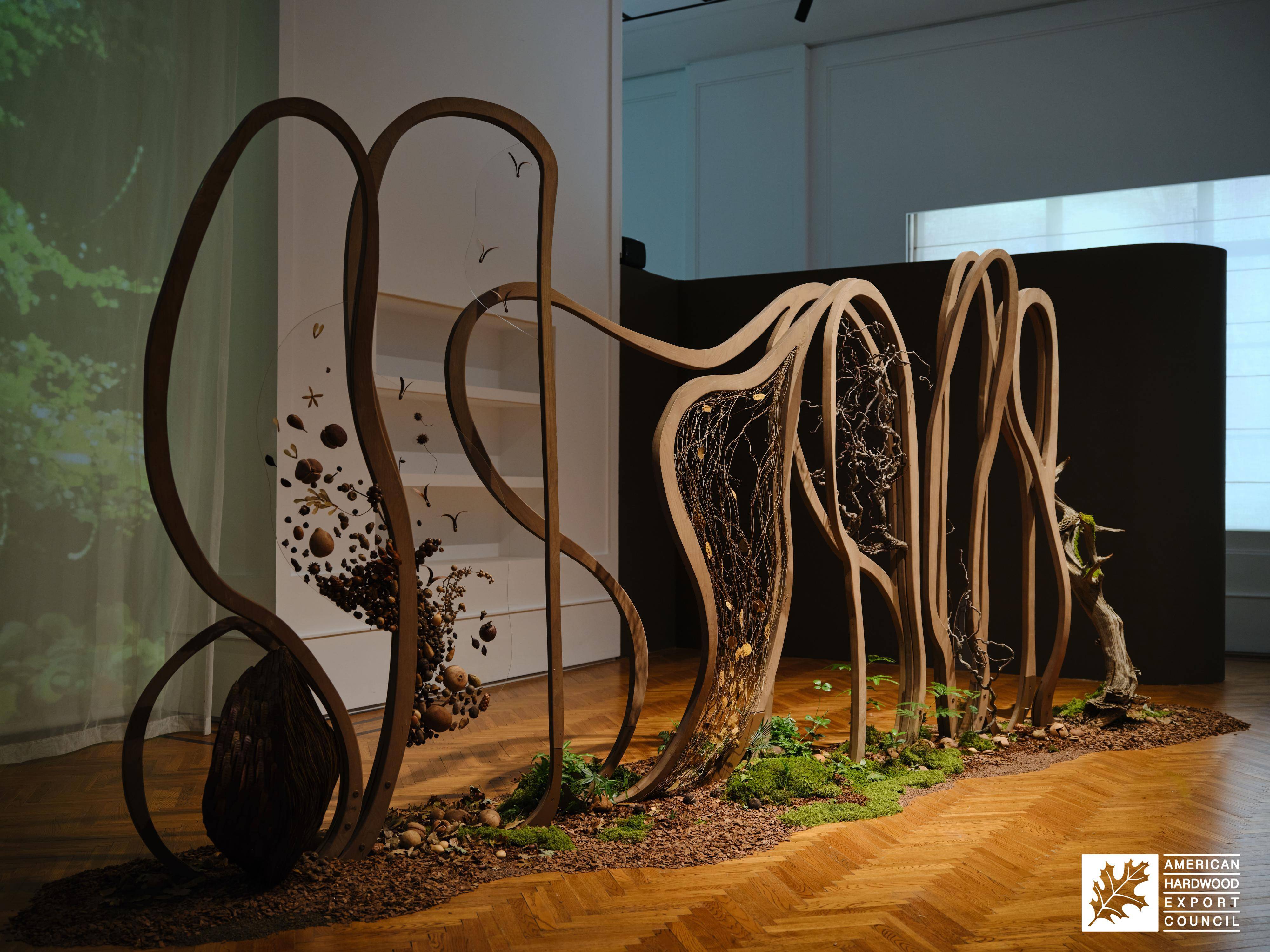 Throughout a tree’s long lifespan, its earliest stages are the most often overlooked—a seed lying dormant deep within the soil, or a tender seedling breaking through the earth to take its first breath. Drawing inspiration from this subtle beginning, floral artist Wang Zi crafted the large-scale art installation Seeds: Slices, using real seeds, fruits, and other natural botanical materials.
The artwork invites viewers to look inside the seed. Invisible internal structures are revealed through a continuous sequence of organic, wood-grain-like cross-sections that transcend the seed’s original scale and extend into the surrounding space. At the installation’s base, an undulating terrain composed of moss, soil, bark, and seeds takes shape. Here, traces of growth and decay intertwine, unveiling the sedimentation and transformation inherent in natural materials.
The work reveals the diverse potential held within a seed. Visitors can observe the fine textures of natural and wooden elements at close range, as wall-mounted layered forest visuals and photographs recall the living habitats of seeds and young saplings. This single seed is a promise from the forest. It promises not just a tree, but an entire future.
Forest Scales
Co-artist: TAG Studio. Established in Shanghai in 2018, this integrated creative agency focuses on crafting diverse artistic experiences.
Material: American White Oak, Ash
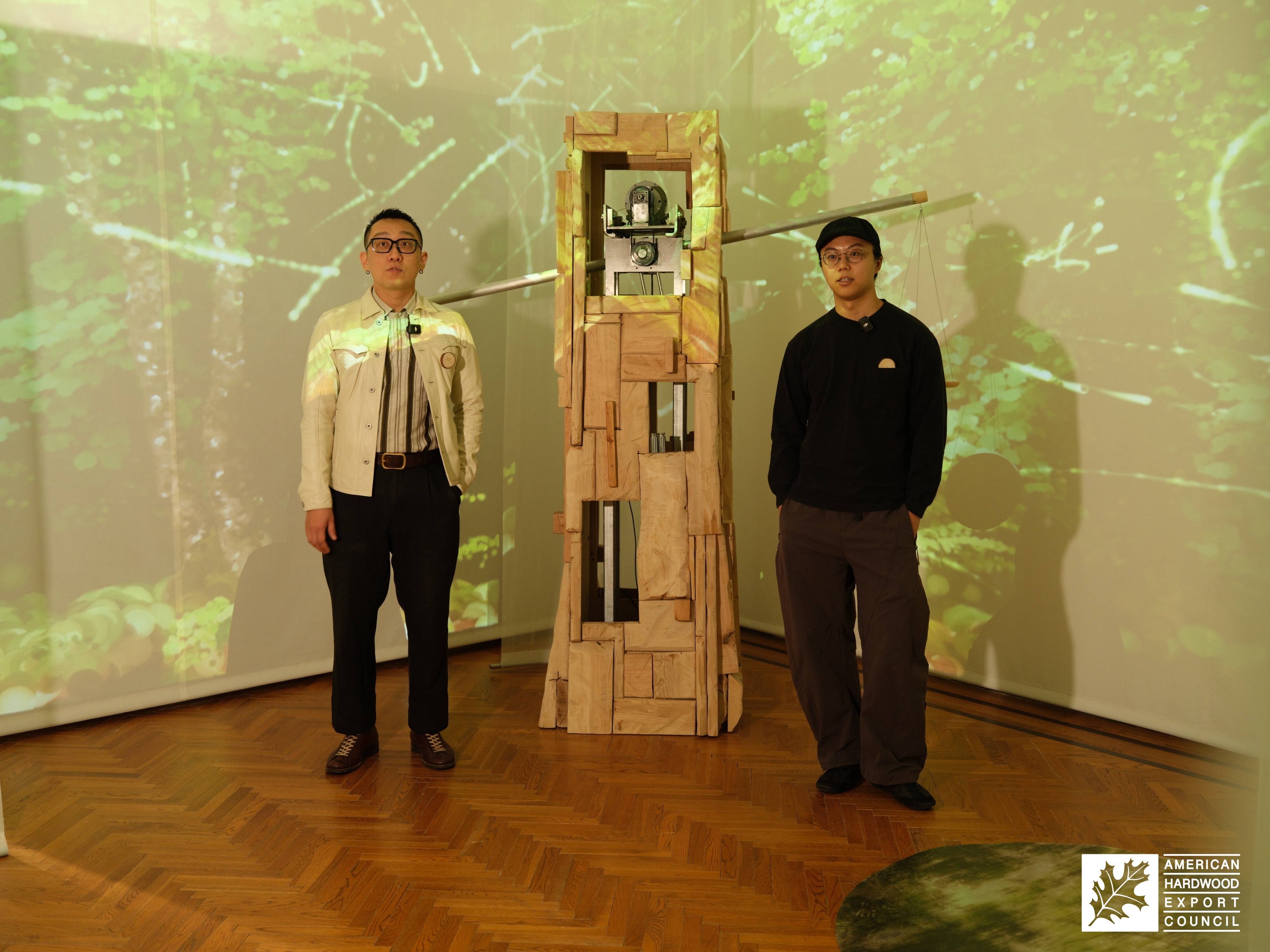 As visitors walk along the corridor, they encounter documentary vignettes spotlighting “forest guardians”, “harvesters”, and other forestry practitioners. Drawing on their expertise, these professionals implement science-based management of American hardwood forests, safeguarding this verdant landscape’s enduring vitality. At the corridor’s terminus, an installation by multimedia art collective TAG Studio translates the documentary’s core narratives into an interactive, immersive experience.
TAG Studio presents an interactive multimedia digital art installation titled Forest Balance, exploring its theme through the metaphor of a “scale.” Forests do not exist in isolation; instead, they demand meticulous planning and long-term stewardship.
The first scale examines humanity’s role within the forest, illustrating how responsible custodianship and science-based harvesting bolster forest health. On one side, trees continue to grow as the light gradually fades; on the other, the forest floor—opened through selective harvesting—fosters the emergence of new saplings.
The second scale offers an objective, tangible representation of forest carbon sequestration and the responsible application of human intervention. Carbon particles and water circulate throughout the forest ecosystem; when timber is utilised judiciously, the captured carbon remains locked within the wood, enduring in a new form.
Two sets of scales, two forms of balance. When visitors place their hands directly onto the weighing pans, they become integral to the system, acting simultaneously as interveners and guardians.
PLAY A TREE
Co-artist: iTSLab, in collaboration with Zhang Cheng’er and Vinci. iTSLab focuses on experimental music and live performance, Zhang Cheng’er on visual and installation art, and Vinci on interactive technology and software development.
Material: American White Oak, Ash, Maple, Cherry, Walnut
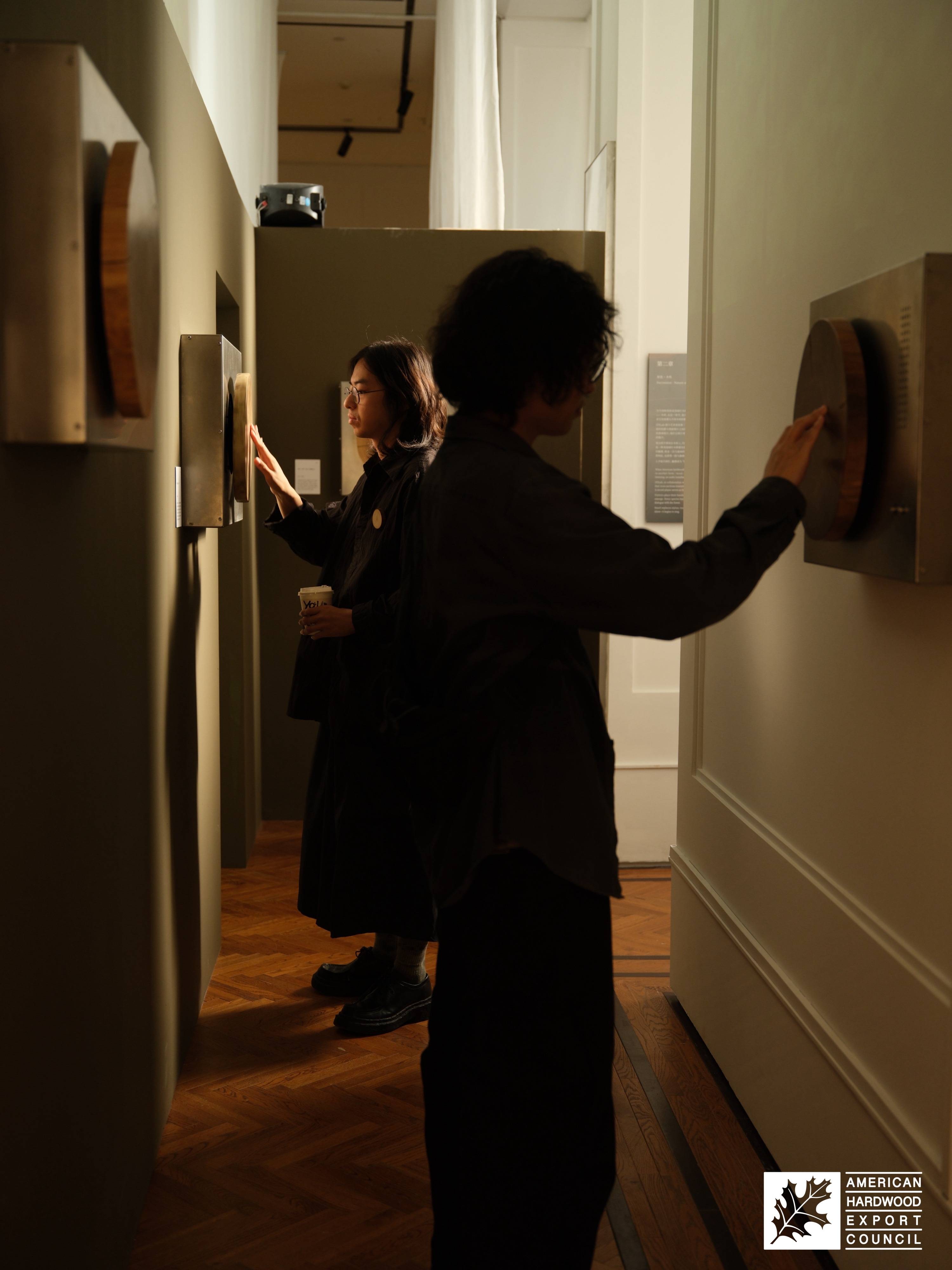
In their interactive sound-based art installation Playing a Tree, iTSLab, collaborating with artists Zhang Cheng’er and Vinci, explores the striking visual parallel between tree trunk cross-sections and vinyl records. Annual growth rings function like audio tracks, transforming wood into a “forest record” awaiting playback. Taking the record player as a visual prototype, the creators have repurposed cross-sections of various American hardwood species into a medium that engages both touch and hearing.
Visitors place their palms on the wood—serving as a stylus—and gently rotate it, activating a meticulously composed forest soundscape. Each American hardwood species boasts its own distinct colour, grain, growth ring pattern, and form, which in turn corresponds to a unique frequency and melody. Through this interactive experience of observing, touching, and listening, visitors not only perceive the natural characteristics of different wood species, but also forge an ethereal, melodic connection with the forest itself.
Cave Heaven
Co-designer: Hou Zhengguang, Founder of MoreLess, a furniture brand, Vice Chair of the Design Working Committee of the China National Furniture Association, Vice President of the Shanghai Industrial Design Association, and a renowned curator.
Material: American Red Oak (main structure of the device), Ash and Maple (stick)
 When a tree finishes growing and is harvested, its journey does not end; instead, it continues to exist in another form as timber. Designer Hou Zhengguang created an interactive installation named Cave Heaven—a “spiritual fortress” shaped through visitors’ participation. By selecting and inserting wooden slats into the structural framework, visitors can experience the distinct textures of various American hardwood species that have undergone advanced processing.
The name Cave Heaven comes from Taoist lore, denoting a hidden gateway to a celestial realm—a passage that appears narrow from the outside, yet conceals a complete, self-contained universe within. Drawing on this concept, Hou Zhengguang designed a massive timber framework, its surface densely punctuated with openings of varying sizes. Each of these windows serves as a conduit for the gaze, as well as a portal through which light, breezes, and sound flow.
Crafted from American red oak, the timber framework exists in an intermediate state; no longer raw lumber, yet not a finished product. Having been cut and processed, it becomes a versatile material in the hands of the designer. Visitors are invited to select from various wooden slats, such as ash or maple, and insert them into square apertures of differing sizes, creating multi-layered, multi-angled window grilles. Through the acts of selecting, touching, and inserting, the distinct colour, texture, and temperature of each American hardwood species are conveyed to visitors’ fingertips, effectively making them co-creators of the piece.
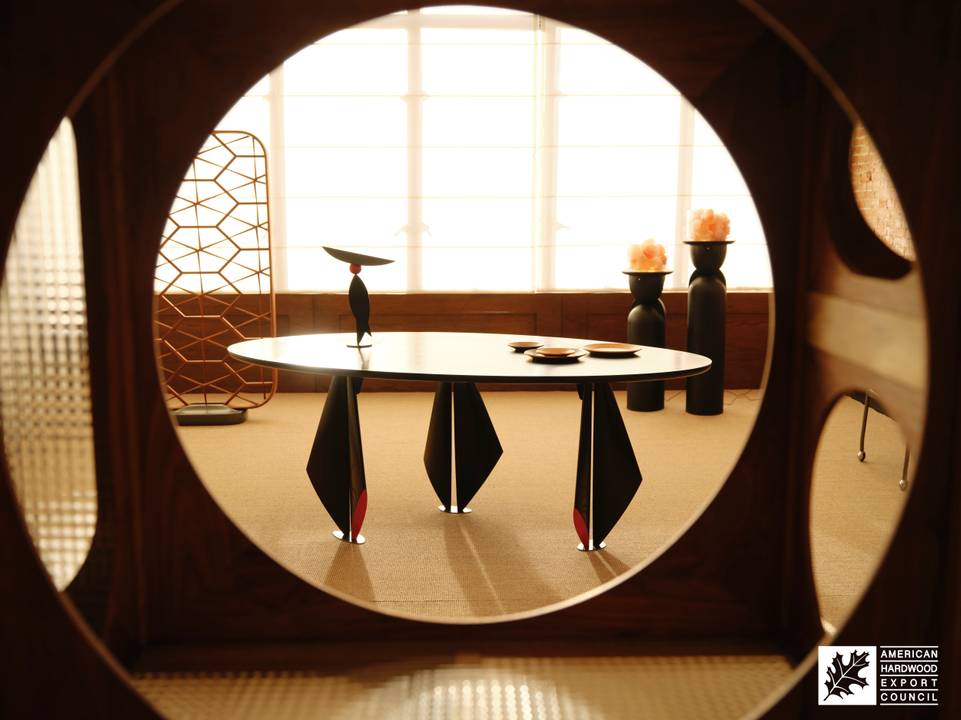
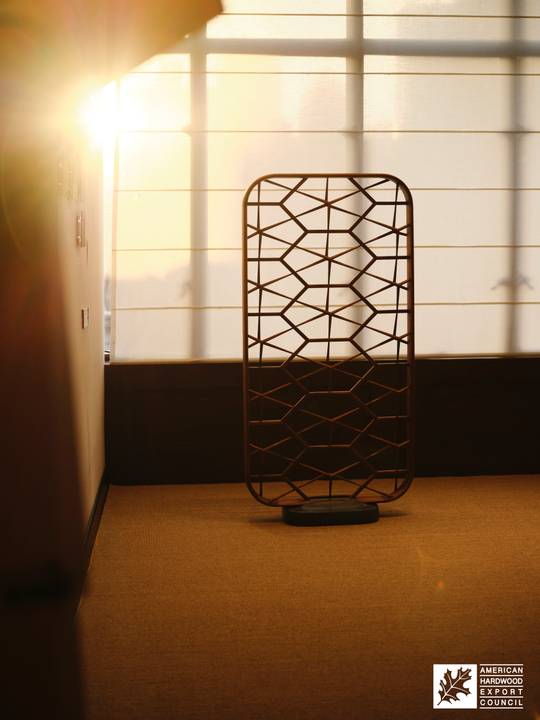
In addition to the thematic works by the four collaborative teams, the exhibition showcases a curated selection of signature pieces from ten home design brands, all crafted from American hardwoods. Using species including American walnut, ash, white oak, and cherry, these designs, brought to life through designers’ ingenuity and creativity, fully demonstrate the diverse beauty of American hardwoods, imbuing the exhibition with a warm, inviting character.
From seed to forest, and from forest to finished design, this journey marks an infinite extension of a tree’s life—a vivid testament to the harmonious coexistence between humanity and nature.