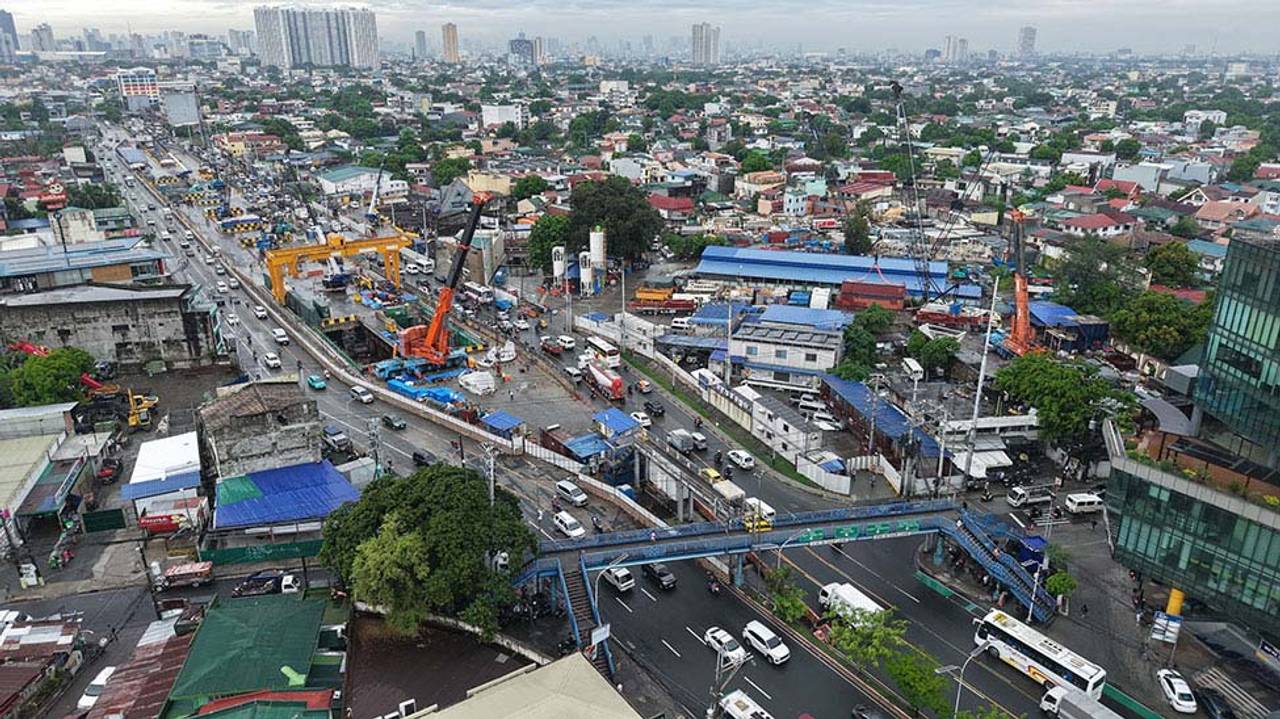
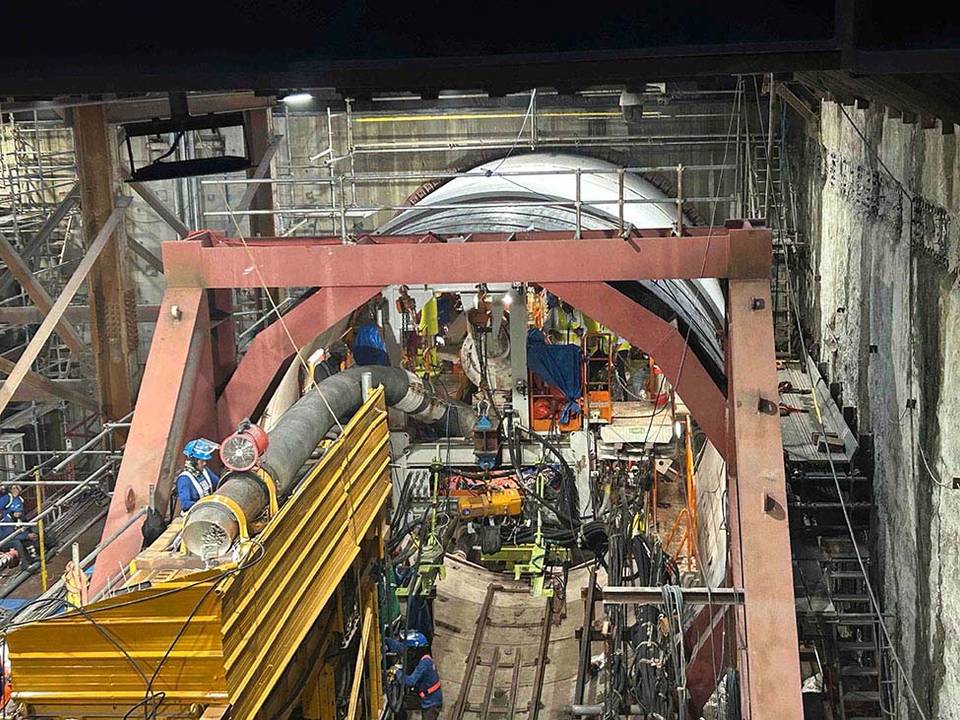
The sixth and final tunnel boring machine (TBM) for the Metro Manila Subway Project (MMSP) Contract Package 101 (CP101) was recently launched from Tandang Sora Station. The package is being carried out by a joint venture comprising Japanese contractors Shimizu Corporation (lead partner), Fujita Corporation and Takenaka Civil Engineering & Construction Co Ltd, and Philippine contractor EEI Corporation.
Four of the six TBMs have already completed excavation. The fifth machine was launched on 7 September 2026, while the sixth is scheduled to reach Quirino Highway Station by the end of 2027. Once both machines have finished their work, the shield tunnels linking the three stations and the depot within CP101 will be complete.
Designed to ease Metro Manila’s chronic traffic congestion, the MMSP is one of the Philippines’ largest public infrastructure projects. Financed through a loan from the Japan International Cooperation Agency (JICA), the project has a total cost of more than ¥800 billion. Construction began in February 2019.
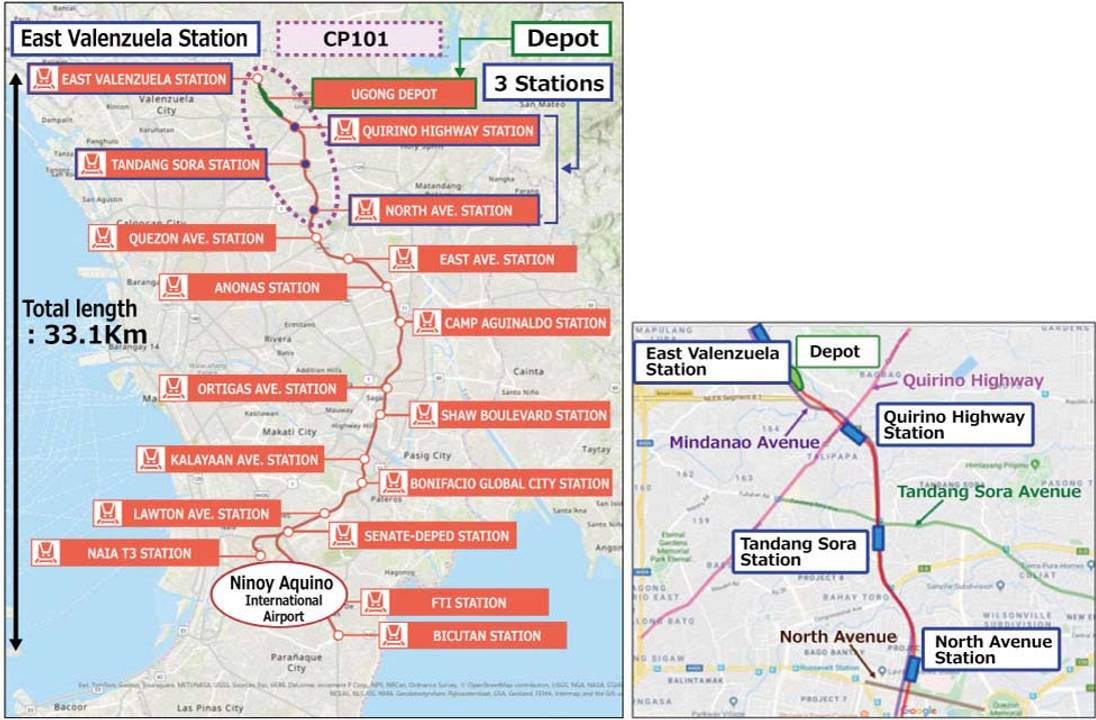
Under a Japan-led framework, the MMSP involves the development of a 33.1-km underground railway connecting Mindanao Avenue in northern Metro Manila to Ninoy Aquino International Airport in the south, with 17 stations, a depot and associated facilities.
Largest contract package
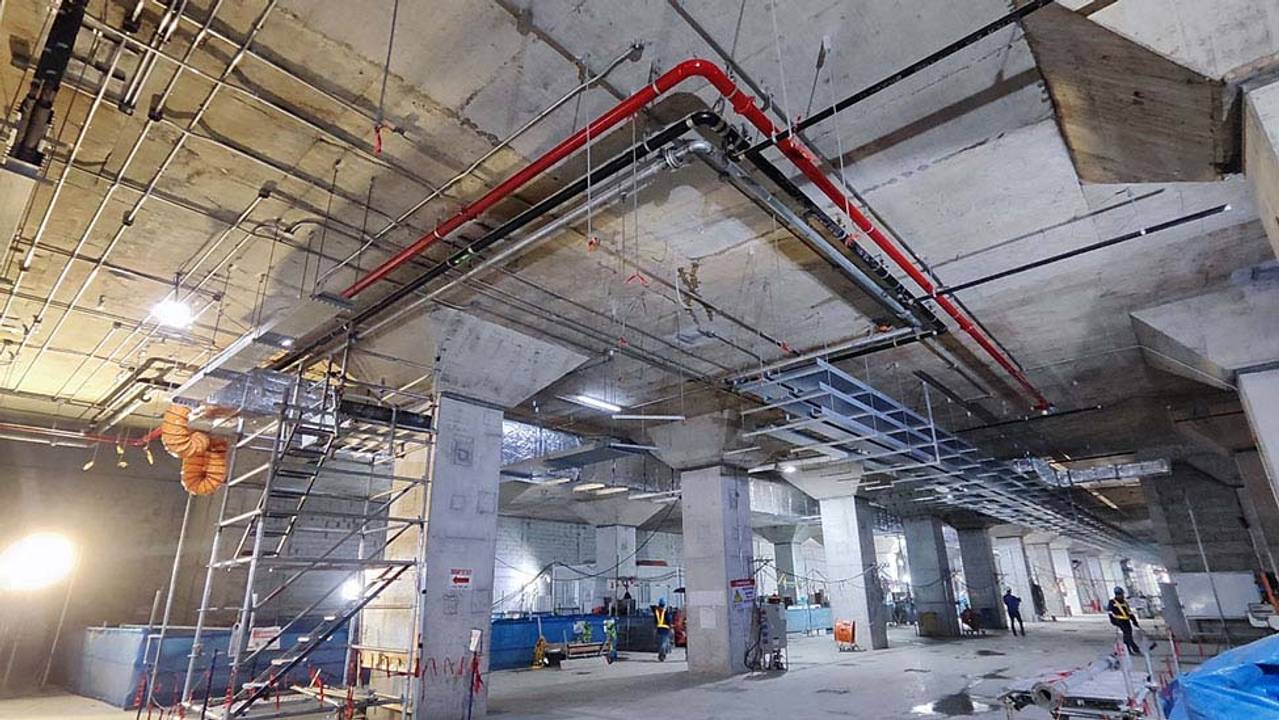
CP101 is the MMSP’s largest contract package. It consists of four stations, six shield tunnels with a finished internal diameter of 6.1 m and a combined tunnelling length of about 9.5 km, as well as a depot with 45 buildings of various sizes, including maintenance and training facilities.
The four stations are as follows:
-
East Valenzuela Station: one above-ground level, 236 m long and 40 m wide.
-
Quirino Highway Station: three basement levels, 235 m long and 26–35 m wide.
-
Tandang Sora Station: three basement levels, 280 m long and 26–35 m wide.
-
North Avenue Station: three basement levels, 380 m long and 36 m wide.
According to Shimizu, the overall project progress currently stands at 62%. Station construction is 62% complete, shield tunnelling is 71% complete and building construction is 27% complete. The contract is valued at approximately ¥245 billion, making it the largest-ever contract awarded for a single urban railway package financed through a Japanese yen loan. CP101 is expected to be completed at the end of 2030.
Shorter schedule
When the contract was awarded, the joint venture (JV) signed an umbrella agreement with the Philippine Department of Transportation (DOTr) in February 2019, which focused on engineering consultancy and constructability reviews under an early contractor involvement (ECI) arrangement. The JV was first tasked with reviewing the original design and proposing ways to accelerate construction. Its recommendations – including replacing the new Austrian tunnelling method (NATM) with shield tunnelling, simplifying station layouts and reducing the number of underground station levels – shortened the original schedule by 10 months, Shimizu shared.
The JV has continued to put forward wide-ranging proposals covering schedule, quality and safety. These include prioritising areas for land acquisition to enable the early commencement of construction, revising construction plans in response to project progress, introducing interim specifications for systems such as tunnel ventilation, and deploying Japanese riggers, formwork carpenters and plasterers as instructors to establish Japanese-style quality and safety management practices.
Shimizu further highlighted that the JV is supported by a multinational team of around 1,300 staff members, comprising not only Filipinos and Japanese but also professionals from Australia, Cambodia, India, Malaysia, Myanmar, Singapore, Sri Lanka, Taiwan, Thailand, the UK and other countries. To meet its contractual technology-transfer obligations, the JV is increasing the number of staff sent to Japan for construction management training to strengthen engineers’ capabilities and equip them to work independently in the Philippines in the future. Local employment is another priority, with most of the approximately 7,000 workers currently employed on site being Filipino nationals.
All images: Shimizu