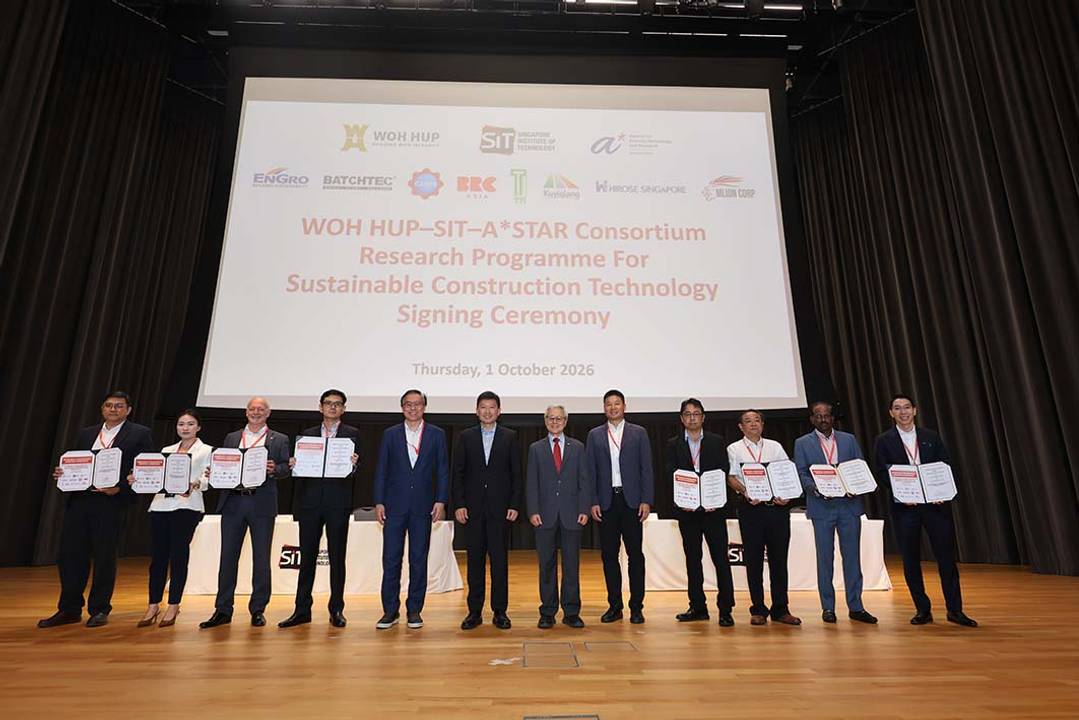
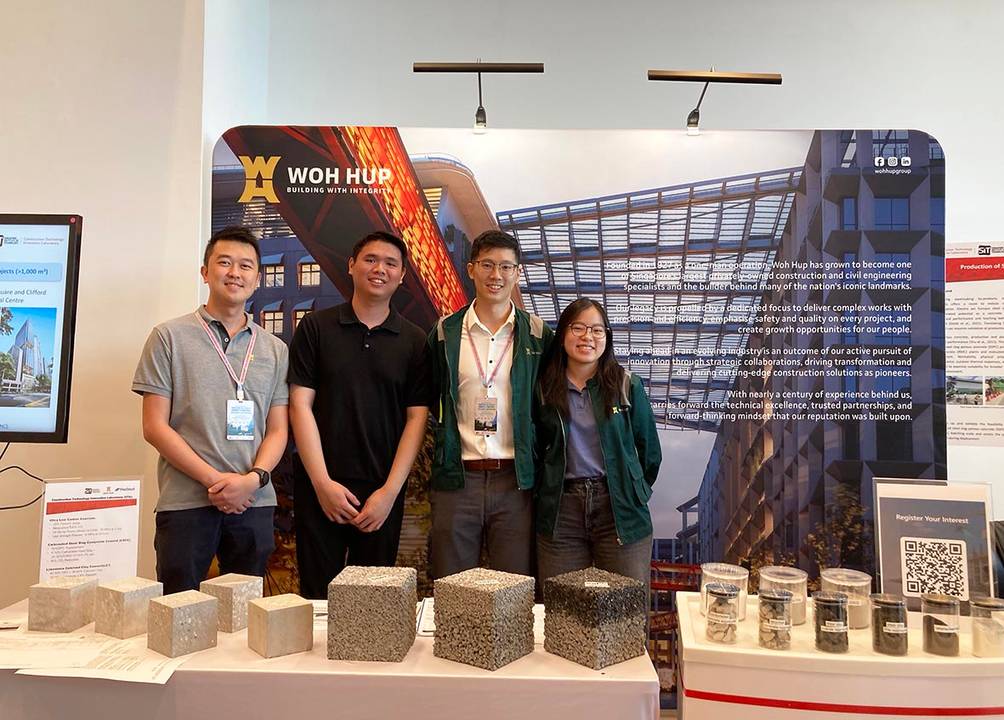
The newly established Woh Hup–SIT–A*STAR Consortium for Sustainable Construction Technology is a three-year research programme with an overall investment of S$30.4 million, supported under Singapore’s Research, Innovation and Enterprise 2025 (RIE2025) plan.
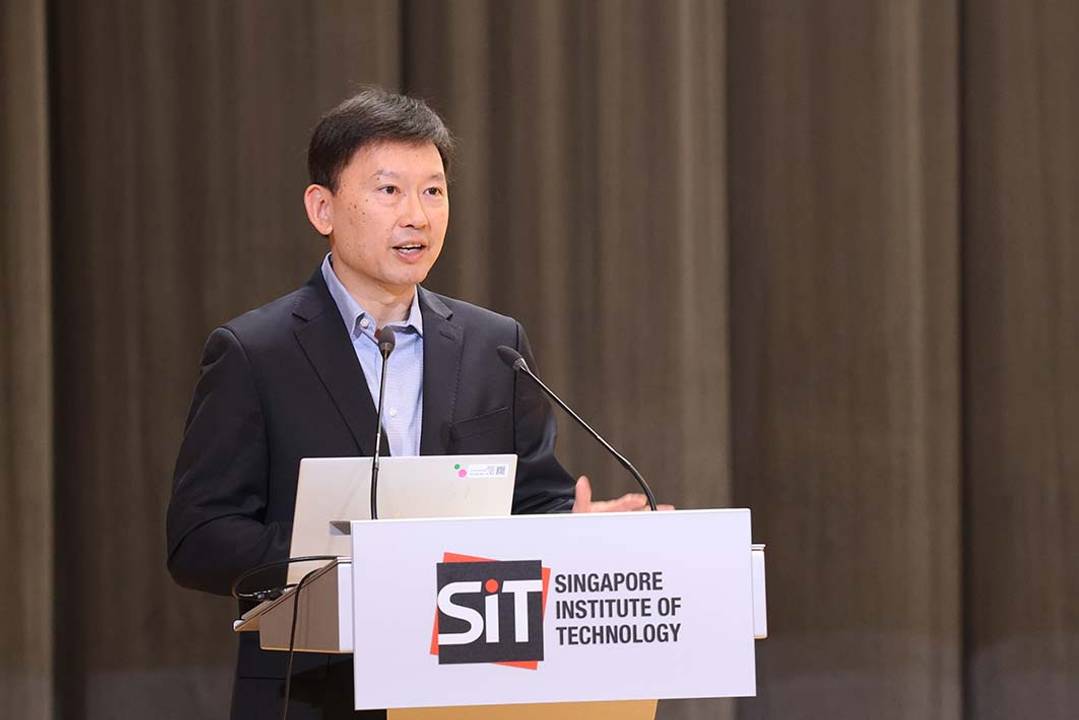
Launched on 1 October 2026 at the Construction Technology Innovation Laboratory’s (CTIL) annual technical seminar, held at the Singapore Institute of Technology (SIT), the initiative aims to accelerate the development, validation and deployment of next-generation sustainable construction technologies. It is currently one of the largest private-sector R&D investments in Singapore’s built environment (BE) sector, said Minister for National Development Chee Hong Tat at the event.
The research programme, which runs from 1 April 2026 to 31 March 2029, brings together SIT, A*STAR (the Agency for Science, Technology and Research) and Woh Hup (Private) Limited, along with seven other industry partners, to develop practical solutions that reduce embodied carbon, improve construction productivity and strengthen the resilience of the BE sector.
The seven partners are: EnGro Corporation Limited, Batch Technologies Pte Ltd, Cares Certification Pte Ltd, Hirose (Singapore) Pte Ltd, Hangzhou Kuyiqiang Advanced Material Technology Co (through Zhongxin Advanced Materials Technology Pte Ltd), TTJ Design & Engineering Pte Ltd, and Mlion Corporation Pte Ltd.
By drawing on expertise across the full value chain, the consortium aims to shorten the pathway from research to deployment on actual construction projects. Government agencies, including the Building and Construction Authority (BCA), JTC Corporation and the Housing & Development Board (HDB), provide guidance and participate in the programme’s steering committee.
Mr Chee expects the initiative to also build Singapore’s capabilities for the future. “We want our firms and professionals to develop new competencies in areas such as AI-enabled design, sustainable materials and data analytics,” he said. “And we hope that by doing this, we can create more good job opportunities for our people, so that they can take on higher-value work as construction methods continue to evolve and our industry continues to transform.”
Tackling industry challenges
The consortium is structured around industry-identified challenges and real-world deployment opportunities. Partners will contribute project sites, operational expertise and validation environments to test and refine technologies under actual construction conditions, helping to accelerate adoption across the sector.
The programme focuses on seven research projects to address some of the sector’s most pressing challenges:
-
Transform demolition waste into materials for land reclamation
Outcome: Reduce reliance on imported fill materials and support circular construction. -
Scale up ultra-low-carbon concrete production
Outcome: Produce cost-effective, low-embodied-carbon concrete through automated CO2 activation. -
Digital verification and traceability for reinforcing steel
Outcome: Improve quality assurance and supply chain traceability. -
Lightweight and long-span earth retaining and stabilising structures
Outcome: Improve productivity and safety in deep excavations. -
Composite steel fibre-reinforced concrete slab system for deep foundations
Outcome: More durable, lower-carbon foundation construction with reduced need for maintenance. -
AI-powered design and optimisation tool for steel-concrete composite flooring system
Outcome: Cost-effective and lower-carbon structural systems for buildings. -
Smart reusability management platform for structural steel reuse
Outcome: Enable circular use of structural steel and reduce waste.
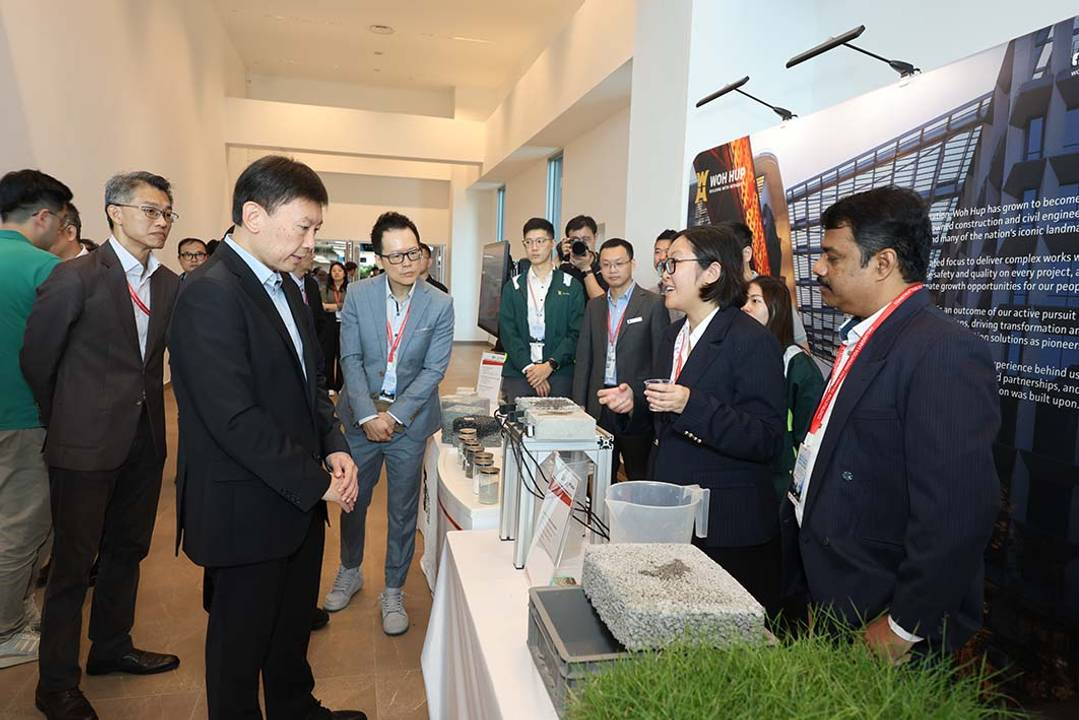
This initiative marks the next chapter for CTIL, SIT’s flagship platform for applied research in sustainable construction technologies, which was founded in 2021. At the event, the centre also celebrated the opening of its facility at SIT’s Punggol Campus.
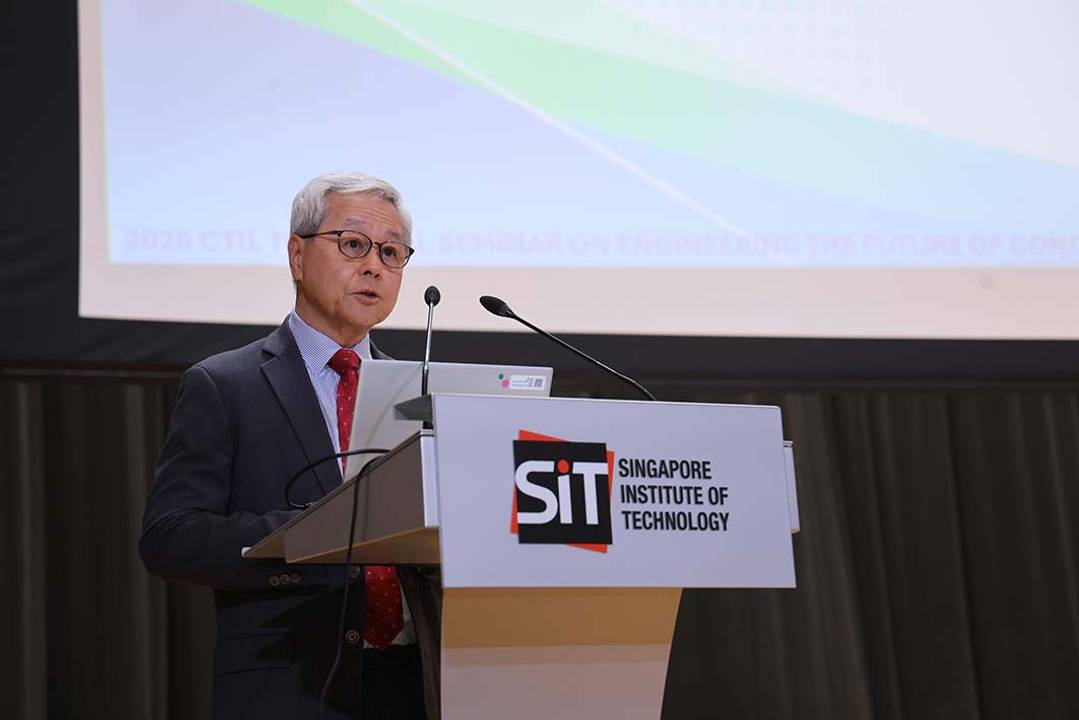
“The work of the past five years has given us a strong foundation, but the challenges ahead – in sustainability and productivity – are more complex, and they require us to go further,” explained Prof Chua Kee Chaing, president of SIT, in his opening remarks. “On sustainability, there are opportunities to rethink the materials we use, new designs and construction techniques to accommodate their use. Here, new technologies such as artificial intelligence can help engineers optimise their designs, improve productivity and make better use of resources.”
Among the seven research projects is an effort to scale up SIT’s ultra-low-carbon concrete technology, which was developed under CTIL’s Phase 1 launch. The existing technology has already demonstrated a reduction of up to 65% in embodied carbon. The next phase of this research programme will focus on further development, validation and test-bedding with industry partners.
By the end of the programme in 2029, the consortium targets a reduction of up to 40% in embodied carbon in urban development applications using the relevant technologies, compared with conventional construction approaches. It also aims to create new business opportunities and deliver operational cost savings for industry partners.
“The built environment sector is facing increasing pressure to reduce embodied carbon while improving productivity and resource efficiency. The challenge is not simply to develop new technologies, but to ensure they can be adopted at scale and create meaningful impact for industry,” said Prof Chiew Sing Ping, head of CTIL at SIT.
“Through this programme, we will develop and validate technologies that address these challenges, from lower-carbon materials and innovative structural systems to AI-enabled design tools and circular construction solutions. By working closely with industry partners throughout the research process, we can accelerate the translation of these innovations into practice while developing the talent needed to support the sector’s transformation.”
“Addressing sustainability challenges in the built environment requires innovation across advanced materials, engineering and AI-enabled optimisation,” added Prof Lim Keng Hui, assistant chief executive of Science and Engineering Research Council at A*STAR. “Through this consortium, A*STAR is working closely with SIT, Woh Hup and industry partners to develop and validate practical solutions that can reduce embodied carbon, improve resource efficiency and strengthen construction productivity.
“By bringing together complementary capabilities in materials science, engineering and AI-enabled design and optimisation, alongside industry expertise, we look forward to accelerating the translation of these innovations into real-world applications that create meaningful impact for the sector.”
“Woh Hup has always believed that meaningful innovation comes from bringing research and industry closer together. Our partnership with SIT, A*STAR and industry partners gives us the opportunity to co-develop solutions that are not only innovative, but also practical and scalable for the construction industry,” commented Yong De-Rhong, executive director at Woh Hup.
“As we work towards a lower-carbon built environment, we are committed to contributing our experience, capabilities and project sites to help turn promising technologies into real-world applications that can make a lasting impact.”
Talent development
Beyond research, talent development is an integral part of the programme. It will train undergraduate and postgraduate students and engage research staff in close collaboration with industry partners. By embedding students and researchers within industry-led projects, the programme will provide opportunities to work on emerging technologies relevant to the transformation of the BE sector. In addition, it supports the capability development of industry professionals through specialised training, industry attachments and technical seminars.
“CTIL’s contribution extends beyond technology. It is also about developing the talent who will shape the future of our built environment sector,” said Prof Chua. “Through CTIL, students and research staff work directly with industry partners on real-world challenges, contributing to projects that move from concept to testing and deployment.
“The integration of applied research and education with industry participation is how SIT works as Singapore’s university for industry. It brings industry, researchers and students together to translate ideas into practical solutions and prepares graduates who are not just technically strong, but who understand how industry works and are ready to contribute from day one.”
Image credits
Images 1-4: Woh Hup
Video: CTIL
Note: For enquiries about CTIL or opportunities to participate, please contact the centre at ctil@singaporetech.edu.sg