As part of Singapore’s efforts to enhance construction productivity, the Building and Construction Authority (BCA) has been supporting the adoption of robotics & automation (R&A) technologies through measures such as the Built Environment Technology and Capability (BETC) Grant and the Productivity Solutions Grant (PSG).
In response to growing demand, BCA will launch the Robot Leasing Support Scheme (RLSS), which co-funds R&A providers to lease their solutions to construction firms.
Funded through the BETC, this initiative will provide up to 50% co-funding for each robot, thereby defraying the costs of scaling up leasing and enabling more firms to benefit from R&A solutions while achieving greater time, cost and manpower savings.
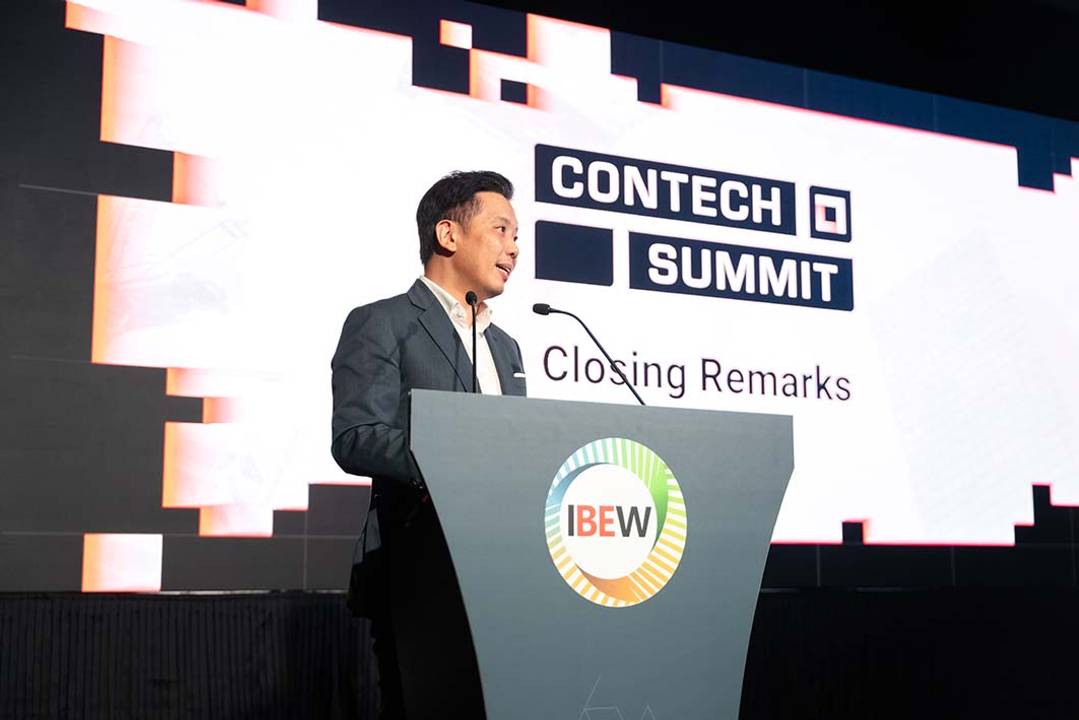
“We are creating strong, sustained demand so our industry can readily deploy robotics on the ground. But we know the challenges: how do you make buying advanced robotic hardware affordable? We know that doing so can be capital-intensive for builders,” said Minister of State for Foreign Affairs and National Development Alvin Tan, speaking at the closing ceremony of the Construction Technology (ConTech) Summit 2026 on 2 September.
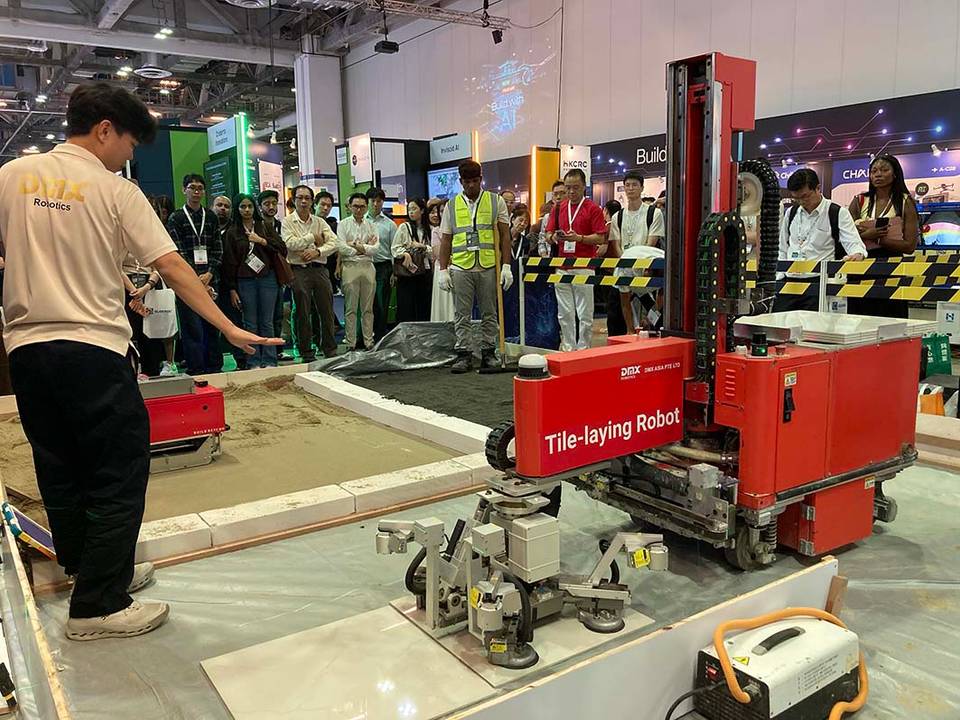
“Under RLSS, we will provide co-funding to robotics and automation solution providers so they can lease proven machines, like concrete-levelling and tile-grouting robots, directly to construction firms.”
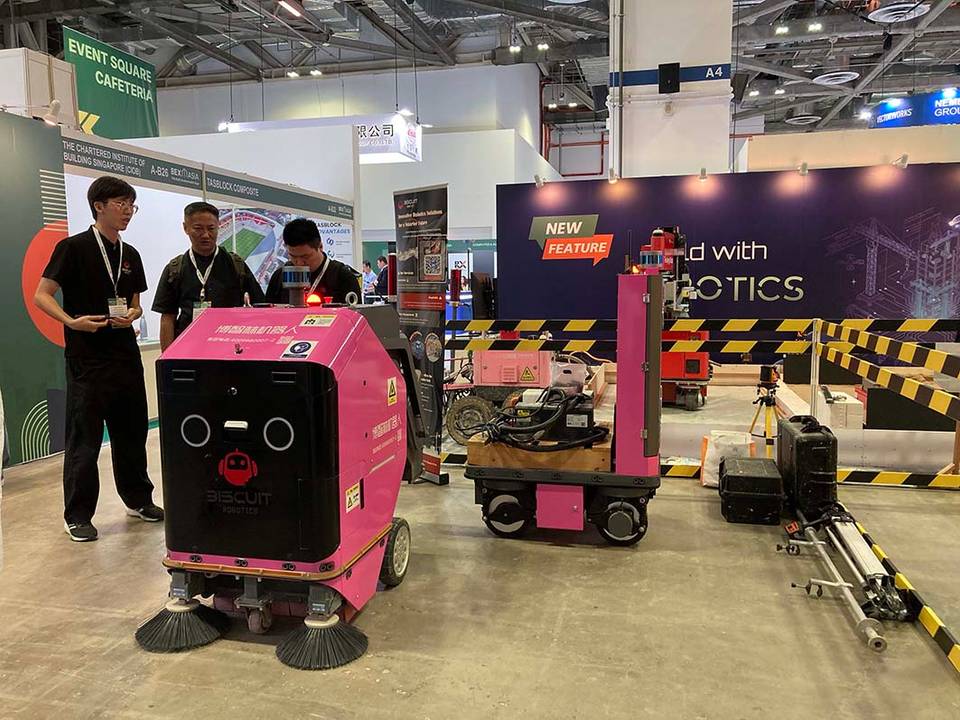
There is a growing pipeline of market-ready R&A solutions that have been proven to deliver significant productivity gains and manpower savings, including robots for autoclaved lightweight concrete (ALC) panel installation, drilling, painting, concrete levelling and tile grouting. However, barriers such as high upfront costs continue to deter some firms – particularly small and medium-sized enterprises (SMEs) – from adopting these technologies, explained BCA.
Leasing can help lower the cost barrier, making it more affordable for firms to access R&A solutions. The authority said that many have expressed interest in leasing options during industry engagements.
Who qualifies for RLSS?
To qualify, applicants must meet the existing BETC grant eligibility criteria. This means they must be built environment (BE) sector-related business entities operating in Singapore and be financially capable of undertaking and completing the proposed capability transformation initiative. SMEs will receive co-funding of up to 50% of qualifying costs, while non-SMEs will receive up to 30%.
Applicants must also be able to sustain a viable leasing model. They should establish a fleet of at least five robots, have a local maintenance team to provide adopters with adequate technical support during the lease period, and commit to offering fixed leasing rates for up to two years.
“The RLSS is a good initiative to encourage more contractors to adopt robotics,” said Toh Chee Boon, deputy managing director of Hi-Tek Construction Pte Ltd. “It reduces the high upfront investment and allows more contractors to access proven robotic solutions. This will help improve productivity, reduce manpower reliance and enhance site safety. It is a practical way to accelerate robotics adoption across the construction industry.”
“The RLSS helps construction companies trial robots without large upfront costs, while providing robotics companies with cash flow at the same time,” added Keefe Wayne Teo, CEO of Fabrica AI, a Singapore-based R&A solution provider. “It also addresses the problem of utilisation – many main contractors do not have a continuous stream of a given task, such as tile grouting, at any given time. Renting a robot allows them to incur the cost of using robotics only when they need it.”
More details on the RLSS scheme will be shared later.
BEAMP initiative
The Singapore government is also exploring another run of the Built Environment Accelerate to Market Programme (BEAMP), a multi-agency initiative by the Building and Construction Authority (BCA), JTC Corporation and Enterprise Singapore (EnterpriseSG) that supports innovators from solution co-creation and pilot testing to market trials and commercialisation.
Established in 2019, the BEAMP programme has issued more than 100 challenge statements that have catalysed corporate-startup collaboration between about 80 firms and innovators. One example is the collaboration between Fabrica AI and Woh Hup to co-develop a robot that automates floor tile grouting, a traditionally labour-intensive task.
Through this partnership, Fabrica AI developed Version 5 of its robot with up to two times the productivity gains, as well as greater reliability and user-friendliness, compared with its Version 4. On the other hand, Woh Hup, an investor in Fabrica AI, had a first look at the technology, which helped it stay ahead in an operating environment with a tighter labour supply. The technology has already been deployed in projects such as One Holland Village.
“BEAMP has built a strong track record over six cycles, with applicant numbers more than doubling over the last three cycles alone. BCA is exploring another run of BEAMP, so I encourage interested firms to keep a close lookout,” said Mr Tan.
He reaffirmed Singapore’s commitment to supporting start-ups in moving their innovations from prototypes to real-world deployment. “Our vision is for Singapore to be the testing ground where all promising prototypes prove their worth and then scale across the region.”
WOG virtual inspection
In another development, Singapore’s regulatory agencies have introduced the whole-of-government virtual inspection (WOG VI) process for Temporary Occupation Permit (TOP) and Certificate of Statutory Completion (CSC) inspections. Under this process, project teams have the option to submit 360-degree virtual scans of their project sites to participating regulatory agencies for virtual compliance checks required for TOP/CSC approvals.
“Instead of coordinating multiple physical site walks, project teams can now capture 360-degree virtual scans of a building. Agencies can then pull up that digital twin and conduct inspections remotely and concurrently,” said Mr Tan.
Preliminary findings from pilot projects – such as the Grand Dunman residential development – indicate that the WOG VI process can deliver manpower savings of up to 30% for project parties. The phased submission approach also enables project teams to save time, as they can now obtain TOP approval up to two months earlier than with the conventional physical inspection process.
The participating agencies include the Building and Construction Authority (BCA), Infocomm Media Development Authority (IMDA), Land Transport Authority (LTA), National Environment Agency (NEA), National Parks Board (NParks), Public Utilities Board (PUB), Singapore Civil Defence Force (SCDF) and the Urban Redevelopment Authority (URA).
Firms can start using WOG VI for their TOP/CSC inspections with immediate effect. To support industry adoption, the participating agencies have published a WOG VI Guidebook that sets out the inspection requirements, processes and key considerations for project teams seeking to adopt the new approach.
Image credit:
Image 1: BCA