As Singapore’s built environment (BE) sector advances with increasingly complex projects, firms must develop a broad range of technical competencies to meet supervision demands. To address this, from 2028, large-scale structural works projects valued at more than S$75 million will be required to appoint Building and Construction Authority (BCA)-licensed firms to carry out site supervision services.
Additionally, there is increasing adoption of remote site supervision across the sector. This approach enables firms to supervise multiple project sites virtually by leveraging digital tools and technologies such as data platforms, smart glasses and live streaming devices, while maintaining rigorous governance and standardised operating procedures.
Engaging BCA-licensed firms for supervision will allow projects to benefit from the necessary firm-level resources and expertise, as well as access to the latest technological developments, to meet evolving demands and deliver safer, higher-quality infrastructure.
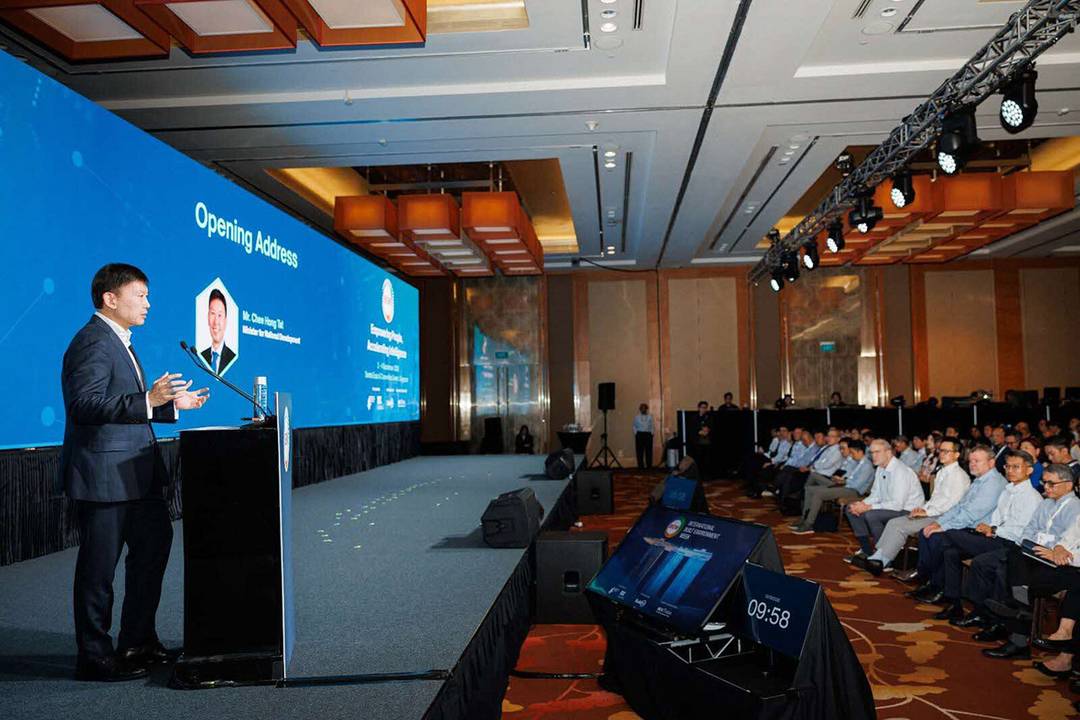
In his opening speech at the International Built Environment Week (IBEW) 2026, Minister for National Development Chee Hong Tat highlighted that “licensed site supervision firms will play an important role in helping to keep pace with the demands of increasingly complex projects and new technological developments, while ensuring quality and safety.”
New SSF Accreditation Scheme
To give developers and builders greater confidence in the firms they appoint, the Singapore Accreditation Council (SAC) has launched the Site Supervision Firm (SSF) Accreditation Scheme. Under this scheme, firms must first be accredited before they can be licensed by BCA to provide mandatory site supervision services for large-scale structural works projects.
To be accredited, firms must meet stringent requirements for competence, impartiality and consistent operations as inspection bodies, in accordance with ISO/IEC 17020. They must also demonstrate the necessary technical expertise, staffing and professional experience, and have structured training programmes in place.
“The accreditation scheme will assess whether firms have the necessary governance structure, systems and processes in place to ensure efficiency and quality control in site supervision, and at the same time effectively harness technology,” said Mr Chee.
In terms of technical expertise, firms are expected to show proficiency in six key areas: concreting works, including precast concreting; structural steelworks; reinforcement in reinforced concrete (RC) members; foundation works; earth retaining and stabilising structures (ERSS) works; and safety barriers.
There are also seven specialist competencies for which firms can be validated in: pre-stressing and post-tensioning works; post-installed anchors/rebars; PPVC systems; demolition works; curtain wall and cladding systems; tunnelling; and land reclamation.
Applications for the SSF Accreditation Scheme open in September 2026. BCA encourages developers and builders to engage accredited site supervision firms before the new requirements take effect in 2028.
BCA Green Mark Version 7
The BCA Green Mark Version 7 (GM v7) is the latest update to Singapore’s green building certification scheme. It aims to accelerate decarbonisation efforts in the BE sector, in support of broader national climate commitments under the Singapore Green Plan 2030.
The updated scheme is anchored by three key objectives:
-
Advance the greening of Singapore’s building stock
-
Mainstream Super Low Energy buildings
-
Respond to industry feedback to make sustainability more practical and achievable
New Energy Rating
The new Energy Rating is part of the GM v7 certification scheme and focuses solely on a building’s energy performance. It provides an alternative certification pathway for building owners to invest in energy efficiency improvements with a clear return on investment – an approach that has been successfully adopted by other international green building frameworks. This Energy Rating will enable more buildings to enter the green building ecosystem and further drive decarbonisation.
“This is done by focusing first on energy performance, because I think that is a big contributor to the overall carbon emissions of the building. So this will enable more building owners to start their sustainability journey through energy improvement retrofits, and then hopefully progressively do more over time,” said Mr Chee.
Under the Energy Rating, BCA will introduce the SLE70 – a new Super Low Energy tier that is achieved by delivering more than 70% energy savings against its building typology’s 2005 baseline. This challenges Singapore’s most progressive developers to demonstrate leadership and strive towards the national target of an 80% energy efficiency improvement.
Alternative cooling technologies (ACTs), including hybrid cooling, active chilled beams and passive displacement cooling, can achieve up to 50% energy savings compared with conventional air-conditioning systems. To further support the industry in mainstreaming such technologies, ACTs will now be recognised under GM v7.
“This is especially useful in Singapore and other tropical countries, or countries with a hotter climate,” noted Mr Chee, “because cooling is the one that takes up the largest amount of energy and contributes the largest amount of carbon emissions overall for buildings.”
After achieving an Energy Rating, industry frontrunners seeking to demonstrate more comprehensive sustainability performance can pursue holistic BCA Green Mark certification. This scheme combines the Energy Rating with points scored for five additional sustainability sections covering Intelligence, Health & Wellbeing, Whole Life Carbon, Resilience, and Maintainability. Together, these criteria enable a fuller assessment of a building’s sustainability performance in all aspects of green building.
Buildings pursuing holistic BCA Green Mark certification will receive two separate certificates: one reflecting their BCA Energy Rating performance tier and another reflecting their holistic rating. This provides building owners with flexibility to display either certificate, or both, depending on their objectives and target audience.
Collaborative development
GM v7 was developed in close collaboration with industry stakeholders, incorporating feedback from consultation sessions with over 150 organisations and 280 professionals throughout the BE value chain. The result is a certification that balances sustainability ambition with practical, cost-effective implementation.
Other enhancements in GM v7 include:
-
More efficient recertification processes. Building owners with large portfolios of similar properties can recertify multiple buildings concurrently, reducing the time and administrative effort required. Buildings that demonstrate sustained energy performance will also benefit from an extended certification validity period of up to five years, up from the current three years.
-
Increased competitiveness and access to green financing. GM v7 is further aligned with globally recognised environmental, social and governance (ESG) reporting frameworks and international sustainability standards, enabling building owners to unlock green financing opportunities and strengthen their competitiveness in a sustainability-conscious global economy.
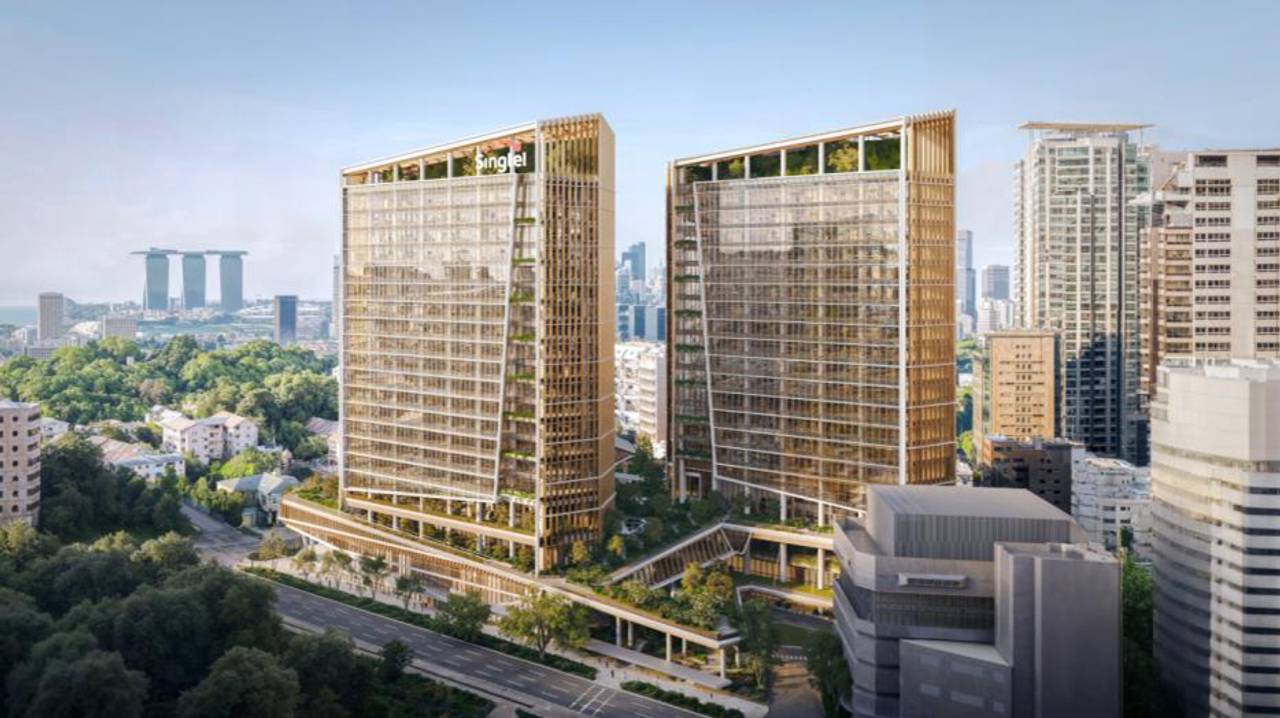
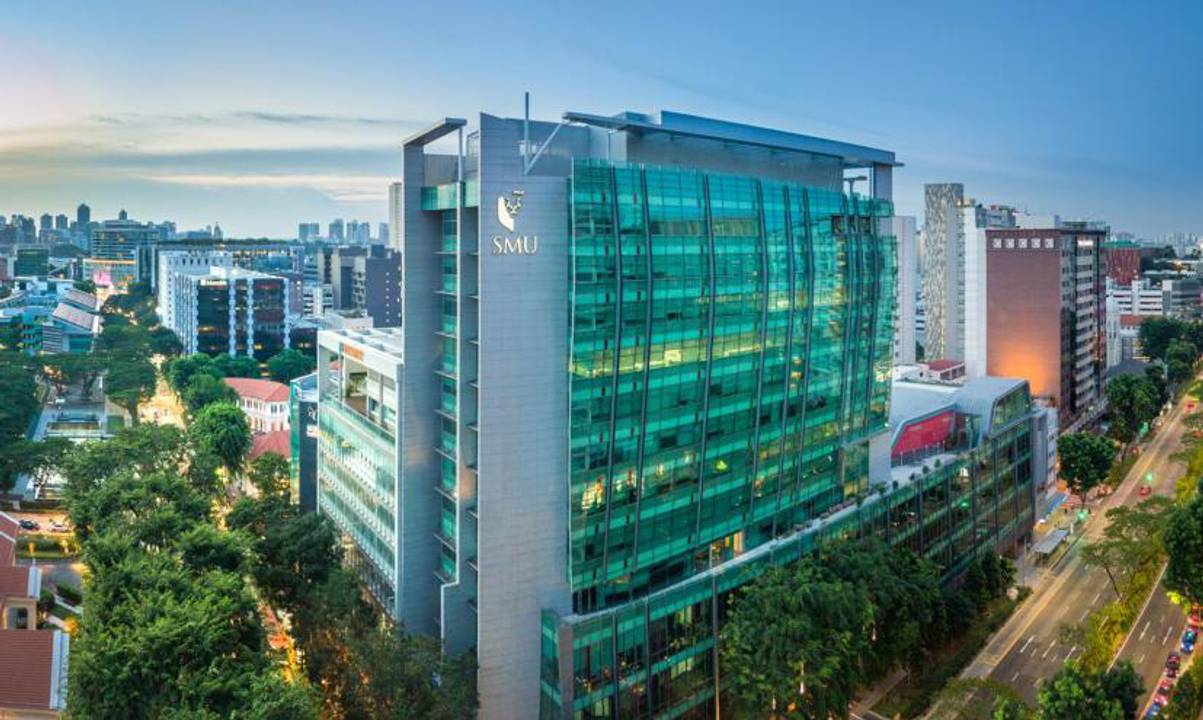
The GM v7 pilot phase was successfully completed across 26 projects spanning all building typologies, with strong participation from major developers and environmental sustainability consultancies. Among these projects were the new Comcentre, SMU Administration Building, Gardens by the Bay (Bay East and Bay South), Tuas Water Reclamation Plant – Administration and Operations Buildings, Raffles Hotel, and UOB Tower 80, to name a few.
Projects can apply for GM v7 from 2 September 2026. BCA Green Mark 2021 will continue to run in parallel, allowing the industry time to transition, with applications closing on 1 April 2027 and all active Green Mark 2021 assessments to be concluded by the end of 2027.
Image credits:
Image 1: International Built Environment Week
Images 2-3: courtesy of BCA