At a recent press event in Zaragoza, Spain, organised by ANMOPYC (the Spanish association of manufacturers of construction, public works and mining machinery) in collaboration with ICEX (Spain’s trade and investment agency), SEAC had the opportunity to learn about advanced innovations shaping the future of the global construction industry.
Here, the team from Technological Institute of Aragon (ITA), a technology centre based in Zaragoza, provided insights into the research and development of an autonomous wheel loader, an autonomous dump truck, an electric hydrogen truck, a robotic 3D printer, as well as a hydrogen excavator and a hydrogen shredder. These technologies are being developed in collaboration with Spanish companies and partners across Europe.
Autonomous loader and truck
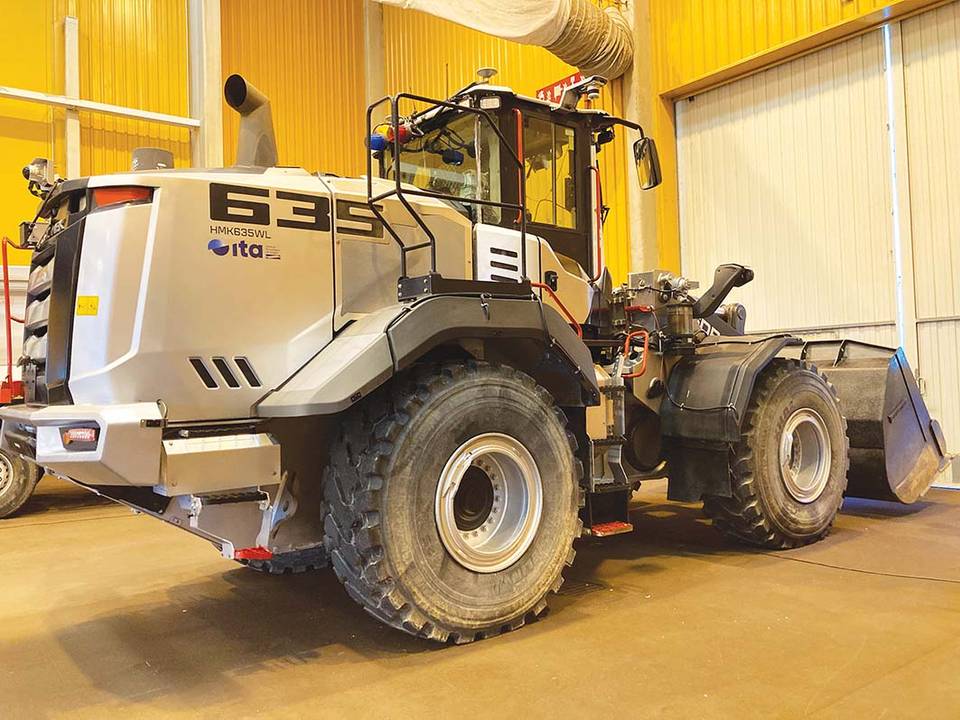
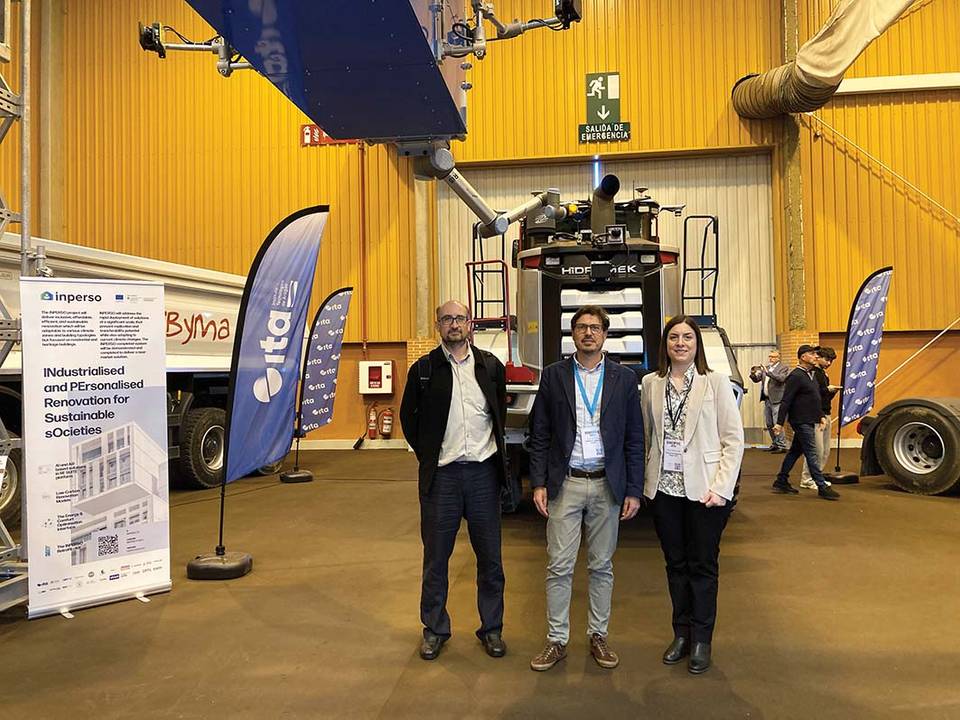
One of ITA’s latest projects is an autonomous wheel loader, developed together with Turkish manufacturer Hidromek. Currently at the prototype stage, the machine is designed to operate in tunnels and hazardous environments, such as demolition sites where dust levels are high and visibility is low.
The technology enables unmanned operation in these challenging conditions, increasing jobsite safety and efficiency. It also reduces risks to workers, said María Teresa Lázaro, robotics R&D engineer at ITA.
The wheel loader is equipped with advanced sensors and cameras to carry out tasks autonomously. The machine can be monitored and controlled remotely via teleoperation, with the operator maintaining full oversight.
Ms Lázaro explained that adopting this autonomous technology allows repetitive, dangerous, or high-precision work to be performed with minimal human intervention, while freeing up workers’ time for more valuable activities.
Another benefit is that autonomous machines can run continuously, optimising uptime and overall productivity, she pointed out, noting that they also help address the shortage of operators in the industry.
According to Ms Lázaro, the project took approximately two years, from design to the prototype stage. The machine has undergone several tests in tunnels and road construction, and ITA is considering additional trials.
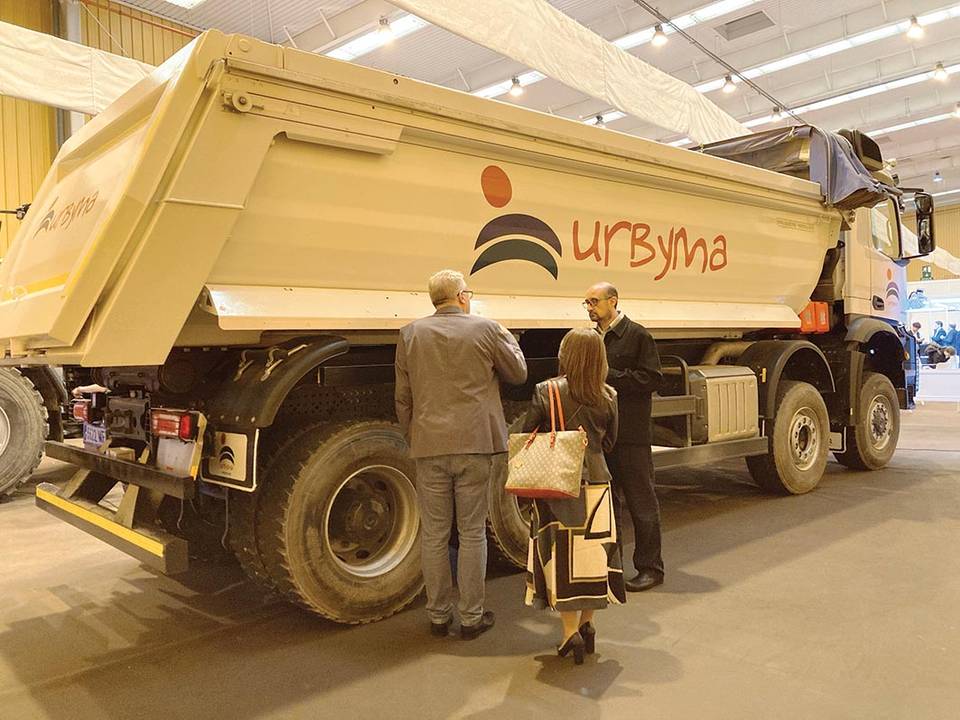
In a separate project, ITA and Spanish construction company Urbyma have jointly developed an autonomous dump truck for transporting aggregates in quarries. The machine can be monitored and controlled remotely by an operator.
This autonomous truck features advanced sensors, cameras and various other digital solutions to ensure high performance, especially in quarries and mines where logistics play a critical role, said Jesús Ballestin, an engineer at ITA.
He shared that the truck has been designed to work alongside other machines and equipment during aggregate transport, significantly improving operational efficiency.
Automating the work process with the autonomous truck not only enables more sustainable operations but also enhances worker safety by minimising exposure to potentially dangerous tasks in quarries and mines, emphasised Mr Ballestin.
He added that the truck was developed over approximately two years. It is currently at the prototype stage, with more than 100 hours of testing completed. The commercialisation timeline has yet to be determined.
Electric hydrogen truck and 3D printer
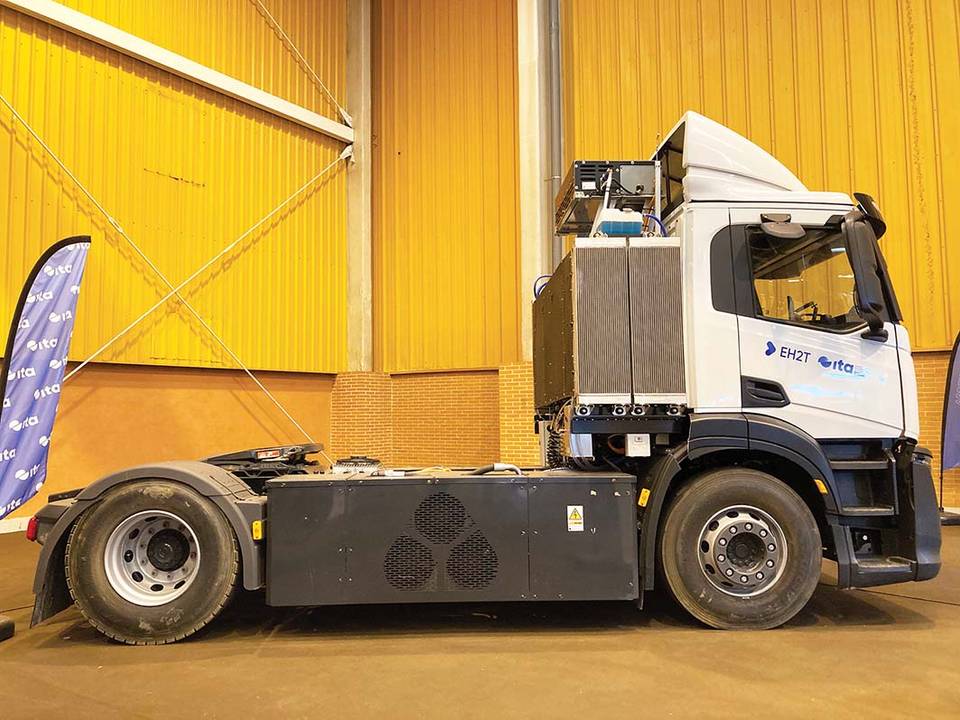
ITA also undertook the EH2T project, which involved retrofitting a 40-t diesel truck to provide a more sustainable alternative. It was first electrified, and subsequently fuel cells and auxiliary systems were integrated.
Isaac Nadal, technology coordinator at ITA, said the ‘hybrid’ truck will help lower carbon emissions and has been successfully tested on a national road in Spain.
According to ITA, the use of battery-electric trucks presents challenges for long-distance operations due to limited range, lengthy charging times, and the high battery mass that reduces payload. Therefore, hydrogen technology can offer greater range and faster refuelling.
The EH2T truck incorporates an electric motor that delivers the same performance as the original diesel engine, ensuring there is no loss of operating performance.
The power supply system of the EH2T truck is structured on a high-voltage bus that receives power from two sources: a 140 kWh battery pack and two fuel cells with a combined output of 170 kW. These fuel cells are supplied by two hydrogen tanks with a combined capacity of 7 kg at 350 bar pressure.
Mr Nadal explained that the EH2T truck now serves as a mobile laboratory for ITA and will be used to collaborate with industry stakeholders, such as transport and mobility companies, industry regulators, and component, electronics and powertrain manufacturers.
In addition, ITA has been working on a robotic 3D printer for refurbishing and customising facades. This initiative is part of the wider ‘Inperso’ project, which aims to deliver inclusive, affordable, efficient and sustainable renovation solutions adaptable to various climate zones and building typologies, with a focus on residential and heritage buildings.
Developed by ITA along with Fundación CARTIF, Universitat Politècnica de València (IRP/UPV) and Vias y Construcciones SA, the 3D printer features a large-scale mechatronic system that includes a motorised global positioner on the X, Y and Z axes, an industrial robotic arm with an extrusion head for mortar, an optimised pumping and supply system, an industrial PC and ROS2-based control architecture, and a BIM-CAM software layer that automates the transition from the digital model to G-code for execution.
At present, the 3D printer is still at the prototype stage and is being tested on a real facade project in the Spanish city of Valencia, said Mr Nadal.
H2MAC: hydrogen excavator and shredder
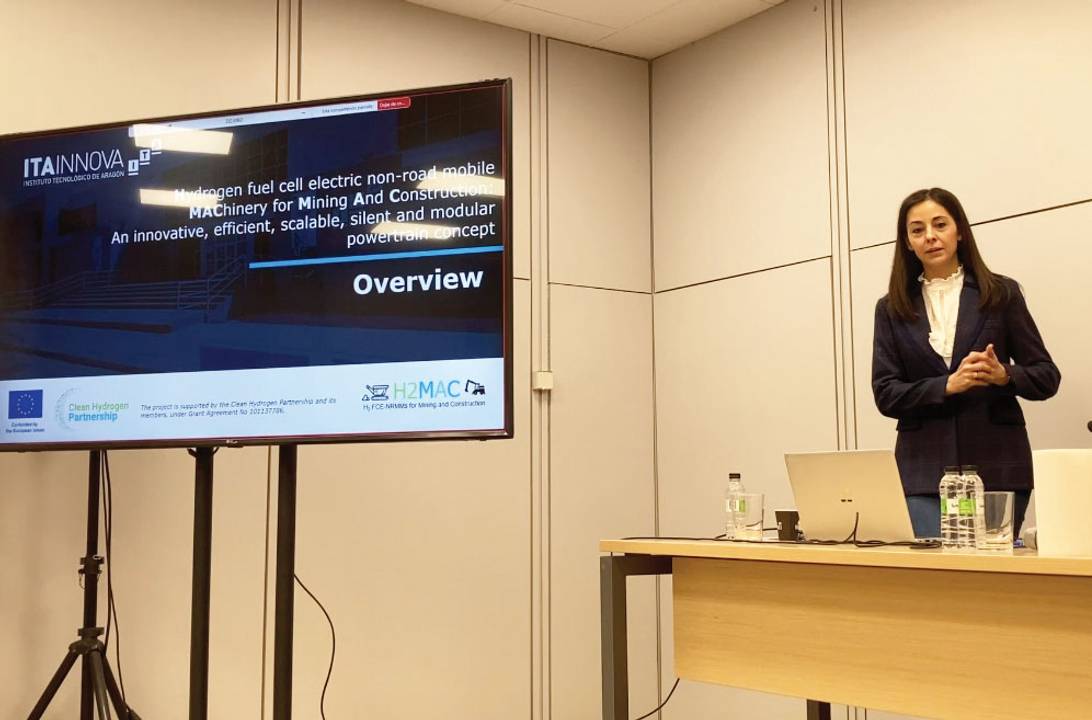
The development of zero-emission heavy equipment using hydrogen fuel cell – named ‘H2MAC’ – is among ITA’s high-profile projects. It is being carried out in partnership with ANMOPYC, FHa (the Aragon Hydrogen Foundation), PowerCell Group, ZB Group, Mann+Hummel, Hidromek and the Tampere University, as a consortium.
The project focuses on developing an excavator (120 kW) and a shredder (240 kW) powered by hydrogen fuel cell powertrains, with the aim of achieving the same performance as their diesel-powered counterparts while offering a zero-emissions solution. Commenced on 1 January 2024, the project is expected to conclude in June 2028. It has been extended by six months from its originally planned completion date in December 2027, said María García-Camprubí, the H2MAC project coordinator..
The budget for this major project is approximately €6.5 million, and the consortium has been awarded a grant of up to €5 million by Europe’s Clean Hydrogen Partnership.
Ms García-Camprubí shared that during the final stage of development, the machine prototypes will be tested simultaneously under real working conditions for at least 1,000 hours at a quarry site in Arcos de la Frontera, south of Spain.
A main challenge of the project is ensuring that the excavator and shredder can operate in harsh environments, including high levels of vibration, heavy dust and extreme temperatures. The machines will also need a modular and scalable design to support the project’s roadmap to market, added Ms García-Camprubí.
The machine prototypes are scheduled to be manufactured over the next half-year, with testing planned to begin by mid-next year. This trial period is anticipated to last a few months and seeks to demonstrate that the new powertrain can perform as well as the current diesel-powered system, making it a viable future replacement for diesel technology.
When fully completed, the H2MAC project is expected to establish a robust basis for the future development of off-road mobile machinery, from production lines to commercial products, as well as provide insights into the requirements for refuelling stations. This simultaneous demonstration will help build confidence in hydrogen fuel cell technology and the supply chain across the off-road industry, thus accelerating its adoption.
Note: This story has also been published in the Jul/Aug 2026 issue of SEAC (with more images). Click here to read it online or here to download the PDF (pages 46-49).