ChemGrout grouting machines have been deployed on construction, infrastructure and repair projects across Asia, providing high-quality materials for various applications such as tunnelling, residential developments, precast and PPVC (prefabricated prefinished volumetric construction), soil stabilisation, and road construction, among others.
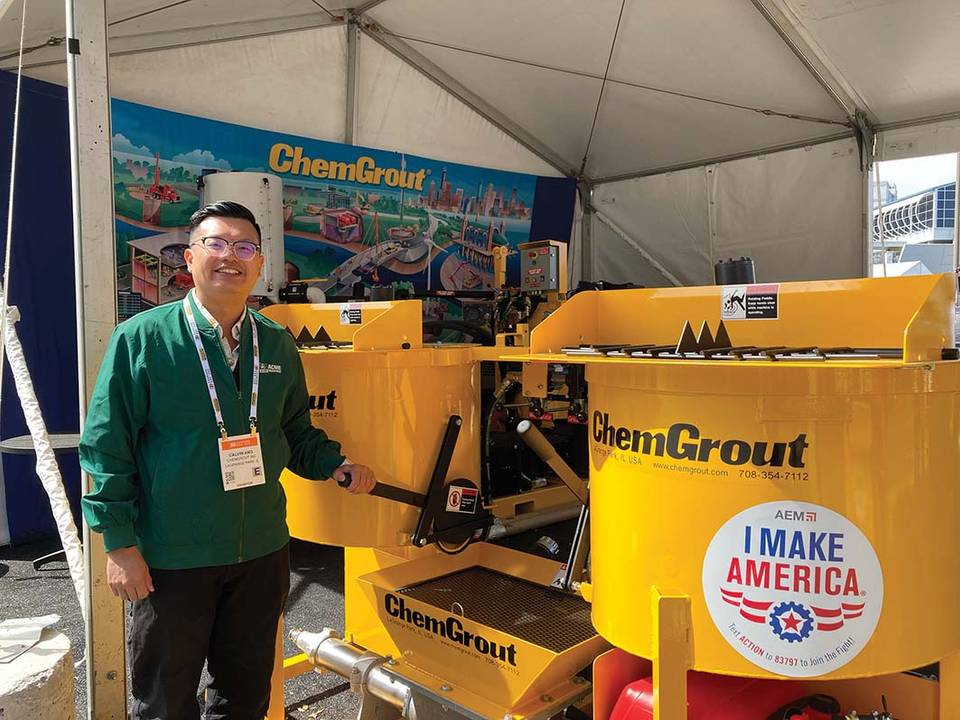
“These machines can help tackle labour shortages and address the constant need for improved productivity in the construction industry,” said Calvin Ang, executive director of Acme Equipment Pte Ltd, an authorised dealer for ChemGrout in Asia.
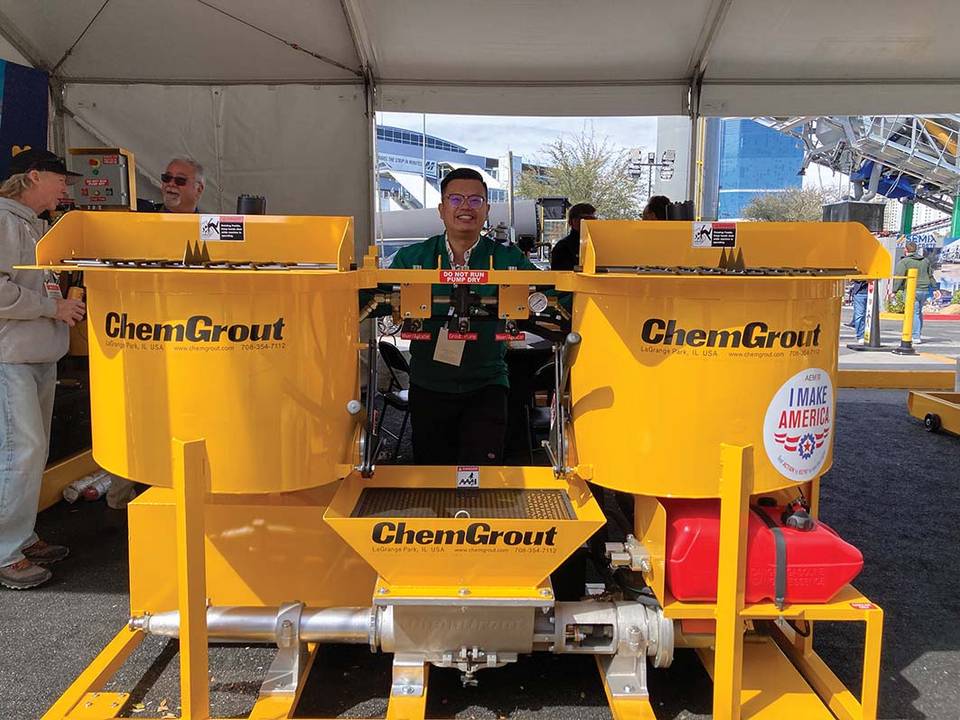
One of the models being used in the region is the ChemGrout CG-500 series, which supports high-volume production. It is suitable for a wide range of applications including tunnels, shafts, dams, plant maintenance and geotechnical works.
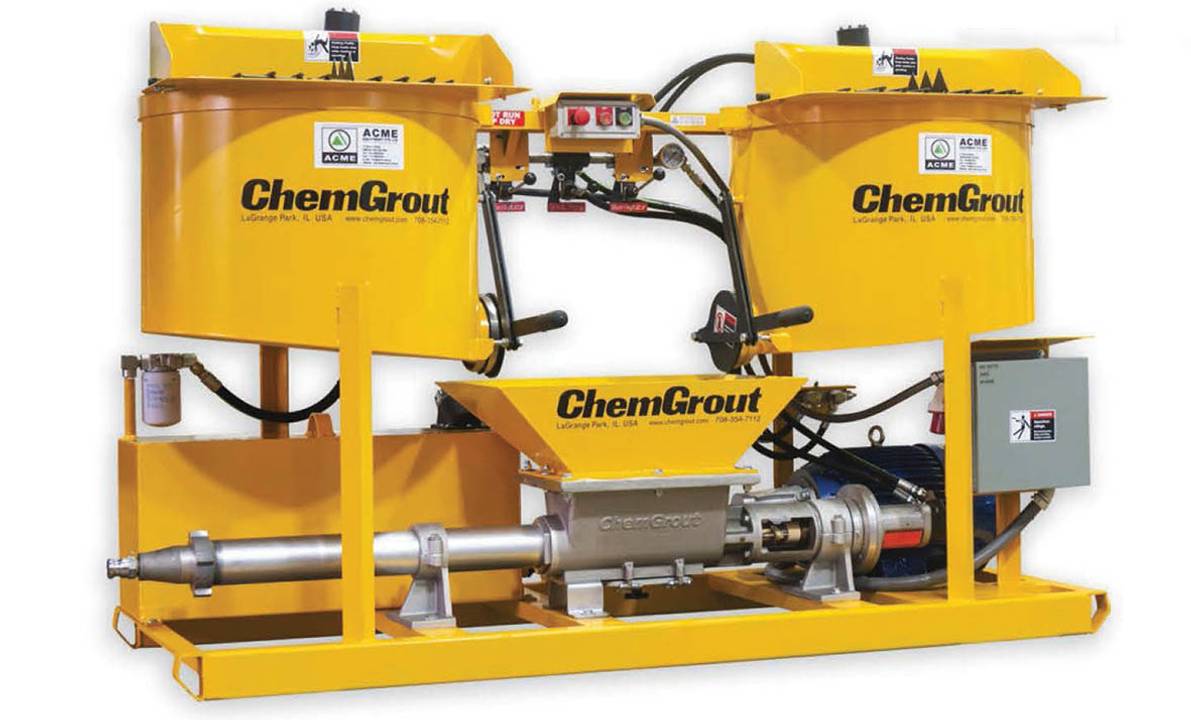
Highly versatile, the CG-500 series delivers a maximum output of 76 l/min and a maximum pressure of 18 bar. It offers several power options: air, hydraulic, electric/hydraulic, gas/hydraulic, and diesel/hydraulic.
Two high-capacity 265-l mixing tanks, a pump, and a 57-l holding hopper are all mounted on a single skid for quick, easy setup and immediate operation. The holding hopper features an internal auger that keeps the material thoroughly mixed while supplying the pump.
The twin mixing tank design allows continuous pumping as each tank alternates in feeding the hopper. This non-stop pumping process maximises the batching of materials such as neat cement, sand/cement, and most commercial pre-bagged grouts.
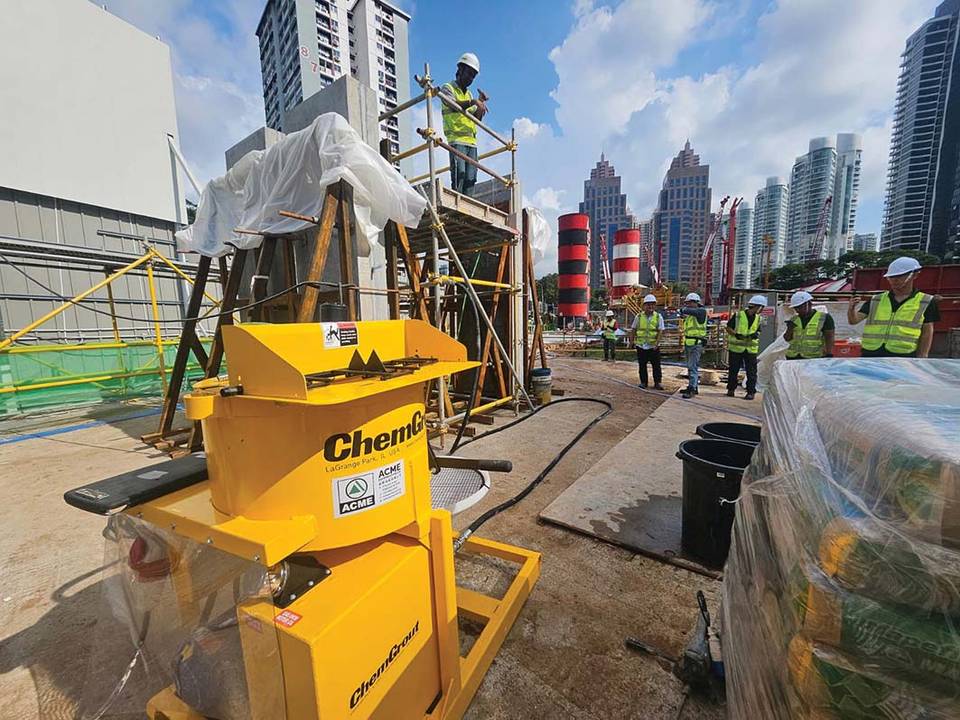
In addition, the ChemGrout CG-550P/EHT is a skid-mounted, electrically powered machine. It has a 128-l mixing tank and the CG-050 grout pump. The mixer is equipped with baffles, bag breakers, and variable-speed, high-efficiency paddles that provide a rapid mixing cycle. The pump flow rate is up to 19 l/min, and the mixer speed is up to 200 rpm.
The holding hopper is connected directly to the suction side of the grout pump to provide continuous pumping. The grout pump is a 2-in, positive-displacement, pulsating piston pump.
A highlight of ChemGrout machines is the mixer, said Mr Ang. “It comes with variable speed control, which is perfect for mixing grout because we can break down the material into its finest form in the shortest possible time. The process is faster than with a traditional mixer.”
The hopper allows continuous mixing and pumping, making work more productive as it requires less manpower, he added.
“ChemGrout machines also have a special 2-in piston pump, which significantly reduces wear and tear,” explained Mr Ang, emphasising the importance of a durable pump that can handle a high volume of grout. “As the machines operate long hours every day, we cannot afford to have something that breaks down frequently.”
Supporting Asia
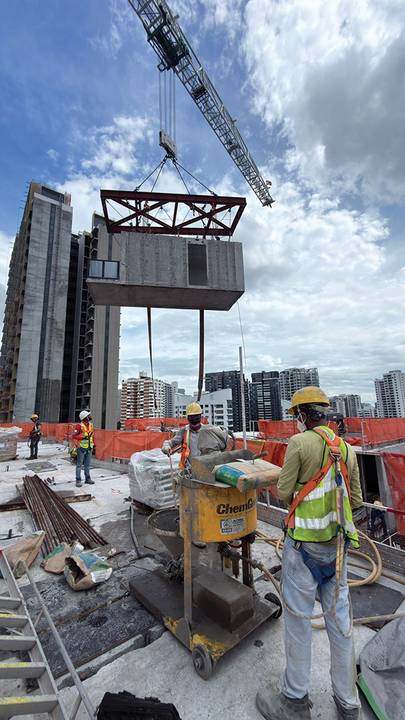
Mr Ang pointed out that PPVC projects, like those in Singapore, are among the many opportunities for ChemGrout machines. Such projects require extensive grouting during installation, “and the volume of grout can be tremendous.”
Headquartered in Singapore, Acme has supplied its machines and equipment to prominent projects across Asia, including the Padma Bridge in Bangladesh, the Malolos-Clark Railway Project in the Philippines, the Purple Line MRT extension in Thailand, as well as major railway and residential projects in Singapore, to name a few.
“Singapore is always a stable market because building projects are coming up every year,” said Mr Ang, adding that many countries in the region are also starting to stabilise and “we can see a lot of projects happening – not just in Singapore, but throughout Asia.” Sri Lanka, the Philippines and Vietnam are some of the promising markets for Acme.
Looking ahead, Mr Ang noted that “considering what’s going on in the world, I think Asia will remain the fastest growing market for now.”
Note: This story has also been published in the Jul/Aug 2026 issue of SEAC. Click here to read it online or here to download the PDF (pages 40-41).