The Building and Construction Authority (BCA) shared insights from the completed Design Prototyping for Decarbonisation (DPfD) study, confirming that Singapore’s target of achieving an 80% improvement in energy efficiency from 2005 levels is technically feasible for new and existing office buildings, new hotel buildings, and new mixed-development buildings with incremental decarbonisation pathways proposed to accommodate varying financial, operational, and technical considerations across different buildings.
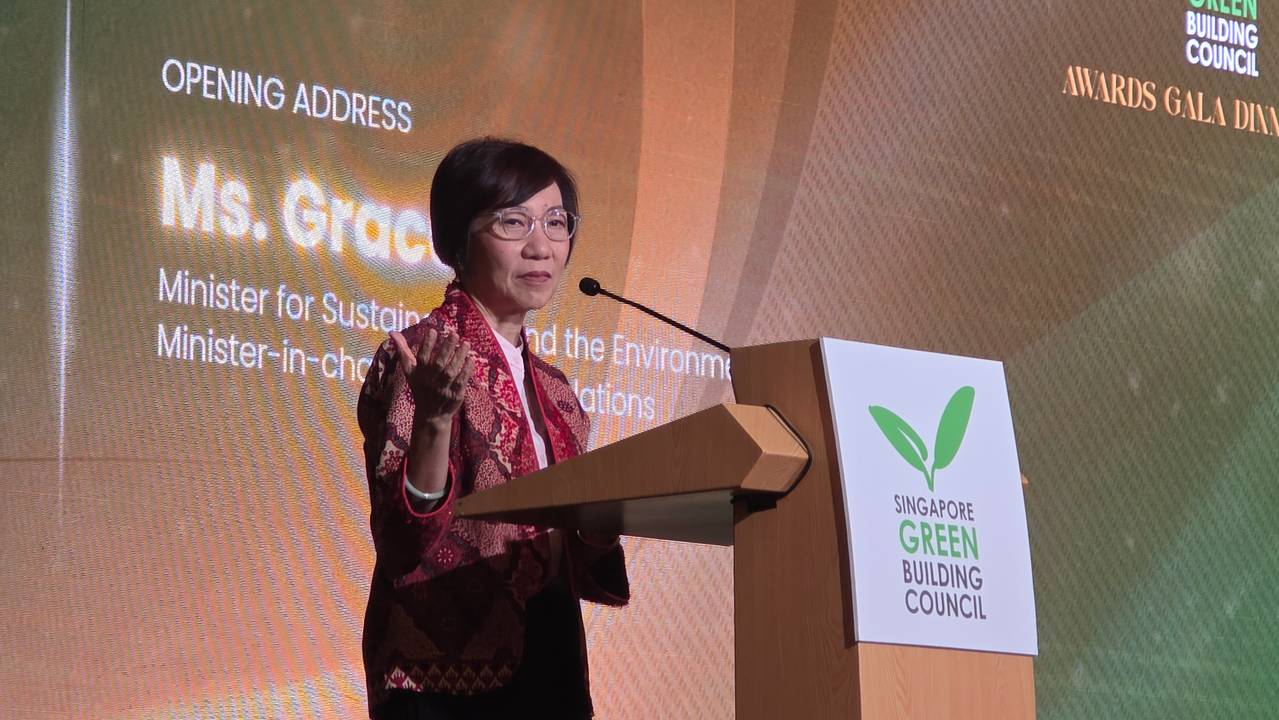
A public report detailing the study will be made available by the end of 2026. The announcement was made at the Singapore Green Building Council (SGBC) Awards Gala Dinner 2026 by Guest-of-Honour Ms Grace Fu, Minister for Sustainability and the Environment.
This comes as Singapore’s buildings sector makes steady progress towards its "80-80-80 in 2030" targets under the Singapore Green Building Masterplan (SGBMP). As of July 2026, the following results have been achieved:
- For the target to have 80% of buildings by Gross Floor Area (GFA) achieve Green Mark Certification by 2030, 66% of buildings by GFA have been greened
- For the target to have 80% of the new buildings achieve Super Low Energy (SLE) standard from 2030, approximately one-third have achieved the SLE standard
- For the target to have best-in-class buildings improve energy efficiency by 80% compared to 2005 levels by 2030, our best-in-class buildings have achieved a 72% improvement in energy efficiency from 2005 levels thus far
Charting the path to 80% energy efficiency
The DPfD is a consultancy study commissioned by BCA to explore decarbonisation pathways for high-rise commercial office, hotel, and mixed-development building typologies. The study assessed the technical options and commercial viability across a range of solutions, providing building owners with practical guidance on improving energy efficiency in their buildings.
Two strategies emerged as particularly impactful. First, plug load management offers a practical and accessible means for building owners to track and reduce energy consumption, with green leases enabling landlords and tenants to co-share cost savings. Second, Alternative Cooling Technologies (ACTs)—such as Passive Displacement Cooling (PDC) and Hybrid Cooling systems—can reduce building cooling energy consumption by 30 to 50% while maintaining thermal comfort. Given that cooling accounts for 40 to 60% of building energy consumption, ACTs can help to provide a meaningful pathway to meet Singapore’s decarbonisation goals.
As of July 2026, at least 33 public buildings and 14 private buildings in Singapore have adopted ACTs. At Dulwich College (Singapore), the adoption of PDC across classrooms, the auditorium, and collaborative spaces has achieved 49.5% energy savings for the air-distribution system. At Paya Lebar Green, a cooling system combining perimeter active chilled beams with interior VAV (Variable Air Volume) AHU (Air Handling Unit) systems and a high-efficiency dual-temperature chiller plant has delivered 45% energy savings. Both projects are recipients of the SGBC-BCA Leadership in Sustainability Award in the Carbon Performance category.
SingLand to pilot advanced solutions at The Clifford
Singapore Land Group (SingLand), one of the developers involved in the DPfD study, has committed to advancing its decarbonisation efforts through the Green Building Innovation Cluster (GBIC) Demonstration programme for the redevelopment of The Clifford at Raffles Place (The Clifford).
The Clifford is a redevelopment project for a 35-storey commercial building with 3 levels of retail space and a total GFA of 52,041.62 sqm. The project will adopt high-efficiency lighting solutions and promote plug load management systems on its office floors, with a target to raise its office block’s energy efficiency performance from 65% to 75% compared to the 2005 baseline. SingLand will also test-bed Passive Displacement Cooling solutions in the building’s retail space to assess viability ahead of potential scaling up.
"The findings from the DPfD study give the industry the evidence it needs to act with confidence," said Mr Tan Chee Kiat, Deputy CEO (Industry Development) of BCA. "We now know that achieving 80% energy efficiency improvement is technically feasible for new and existing office buildings, new hotels and mixed developments. ACTs alone can cut cooling energy consumption by up to 50%; the technology is ready, and the business case is clear. With extreme weather patterns and rising temperatures increasing the urgency to act, I strongly encourage building owners and developers to take that next step towards adopting ACTs in their buildings."
Record nominations reflect growing industry momentum
The Gala Dinner also saw the announcement of winners of the prestigious SGBC-BCA Leadership in Sustainability Awards 2026, with a record 107 nominations—a 29% increase from the previous edition in 2024.
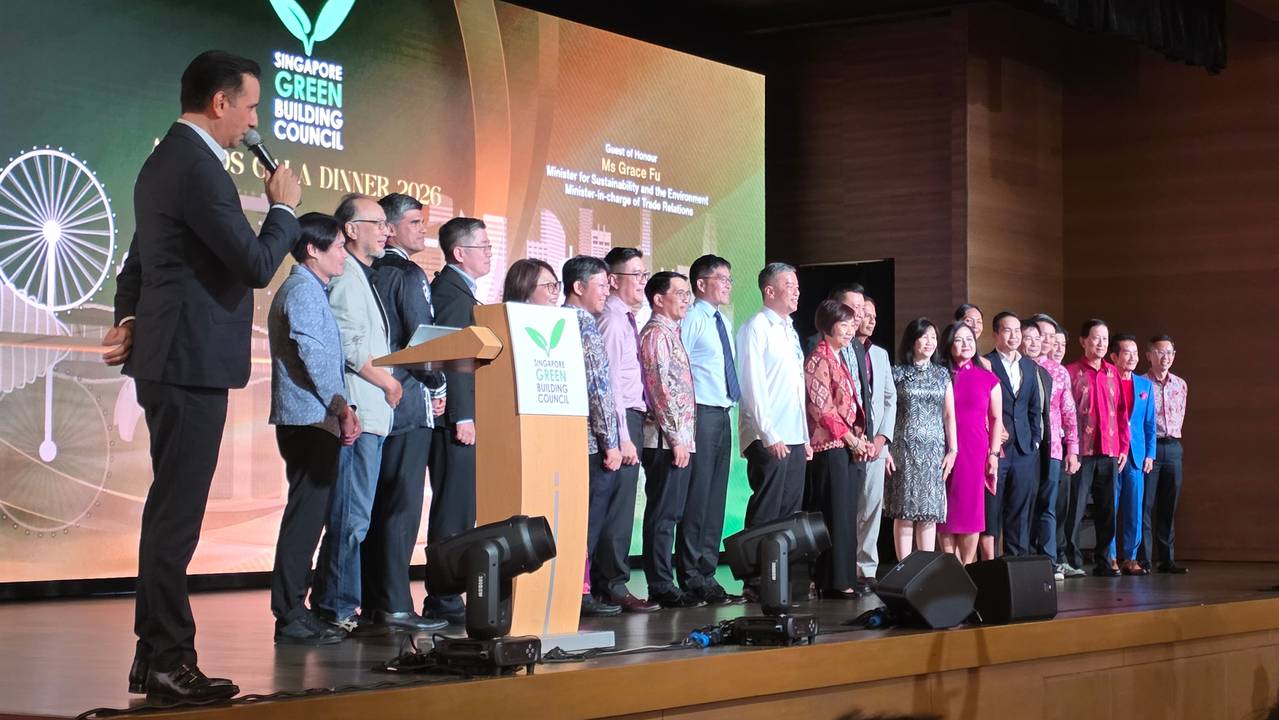
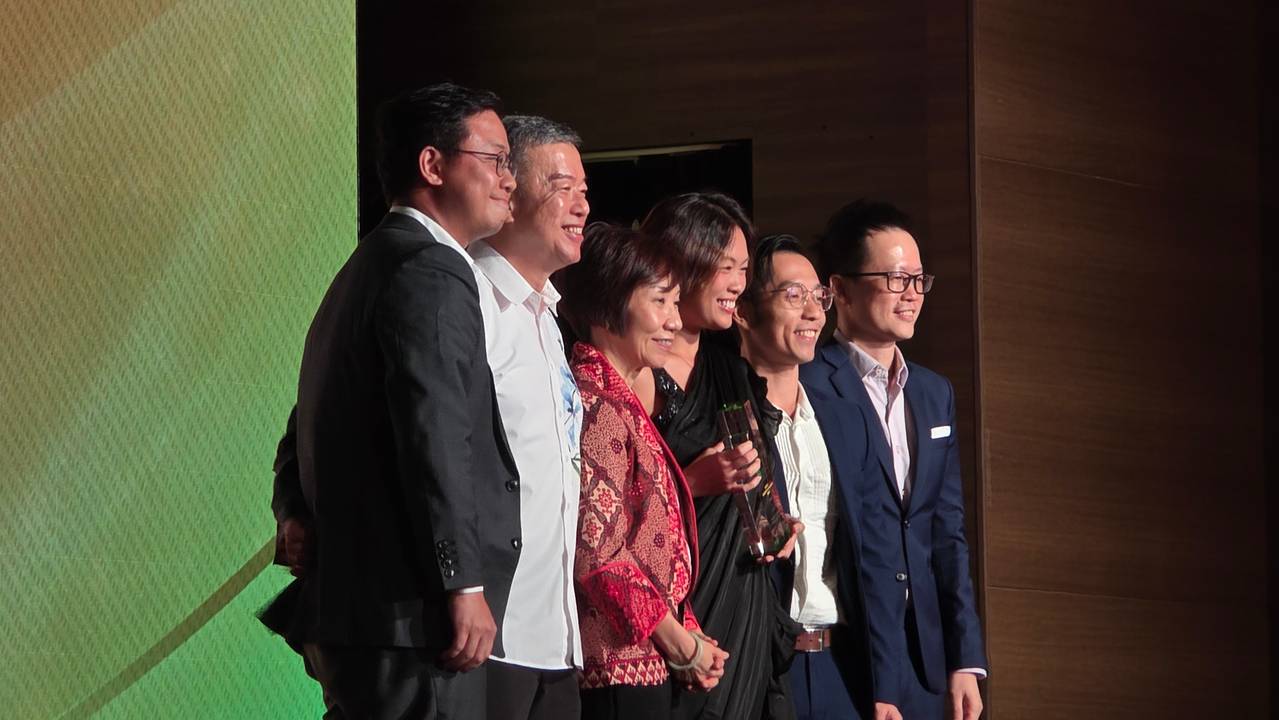
The biennial Awards, now in their fifth edition, recognise professionals, organisations, and building projects that have demonstrated outstanding contributions to Singapore’s green building movement. 24 winners received their trophies from Ms Fu at a dedicated ceremony during the dinner.
Award winners
The Professional Leadership in Sustainability Award recognises exceptional Green Mark Professionals who have demonstrated outstanding leadership, innovation, and commitment in advancing sustainability within Singapore’s built environment. The Award seeks to honour professionals whose personal vision and drive have created lasting impact, pushed industry boundaries, and accelerated Singapore’s journey toward a greener future. This Award celebrates transformative leadership for those who have gone above and beyond to champion change, influence the industry, and leave a legacy of sustainability excellence. The recipients were:
- Yong Ping Quen, Director, Building System and Diagnostics Pte Ltd, Green Mark Advanced Accredited Professional (GMAAP)
- Teo Hwee Yean, CEO, CBM Solutions Pte Ltd, Green Mark Advanced Accredited Professional (GMAAP)
- Nadaraja Sripragas, Director, Sustainable Design & Climate Adaptation, Ramboll Pte Ltd, Green Mark Advanced Accredited Professional (GMAAP)
- Li Qiao Yan, Divisional Director, Sustainability and Resilience Office, SJ Group, Green Mark Advanced Accredited Professional (GMAAP)
- Yong Cheng Hong, Associate, Arup, Green Mark Accredited Professional (GMAP)
The Business Leadership in Sustainability Award honours companies and organisations that demonstrate exceptional commitment, strategic innovation, and measurable impact in advancing green building practices and sustainability within Singapore’s built environment. This Award recognises corporate leadership that not only achieves internal excellence but also elevates industry standards and accelerates the broader market transformation toward a sustainable future.
IMPACT — Leadership Through Integration & Results
This sub-category is for organisations that have deeply embedded sustainability into their core business strategy and operations, delivering consistent, measurable, and industry-leading environmental and social outcomes; and for companies with mature ESG frameworks, outstanding green building portfolios, robust tracking systems, and proven stakeholder engagement that drives real-world change. The winners were:
- Building System and Diagnostics Pte Ltd
- Frasers Property Singapore
- Housing & Development Board (HDB)
- Teambuild Engineering & Construction Pte Ltd
INNOVATION — Leadership Through Solutions Development
This sub-category is for organisations that have developed or significantly advanced novel technologies, products, services, or business models that solve critical sustainability challenges in the built environment; and for product manufacturers, technology firms, consultancies, or service providers with groundbreaking solutions that have been validated and adopted in the market, delivering superior environmental performance. The winners were:
- GreenA Consultants Pte Ltd
- Keppel DHCS Pte Ltd
- Uniseal Creative Solutions Pte Ltd
TRANSFORMATION — Leadership Through Strategic Change
This sub-category is for organisations that have undergone a fundamental, strategic shift to place sustainability at the core of their business, transforming their culture, operations, and market position; and for companies that can demonstrate a clear “before and after” journey, showcasing intentional change management, renewed corporate vision, and tangible outcomes from their sustainability-led transformation. The winners were:
- Cora Environment
- Crestar Enterprise Pte Ltd (Crestar Fans)
- Tai Sin Electric
The Building Project Leadership in Sustainability Award recognises outstanding green building projects that demonstrate leadership, innovation, and transformative impact in advancing a greener, more sustainable built environment in Singapore. This category honours developments that exemplify sustainability across different achievement areas and building types.
The Building Project must be located in Singapore, have at least one year of verified operating data, and must have attained the highest Green Mark rating for the corresponding building project typology (Green Mark Platinum, Green Mark Platinum Super Low Energy, Green Mark Platinum Zero Energy, Green Mark Platinum Positive Energy).
Carbon Performance
Projects submitted demonstrate exceptional energy efficiency, innovative low-carbon materials, embodied carbon reduction strategies, renewable energy integration, and comprehensive carbon accounting throughout the building lifecycle. The winners were:
- The GEAR—Developer/Owner: Kajima Development Pte. Ltd.
- The Greenhouse at Dulwich College (Singapore)—Developer/Owner: Dulwich College (Singapore)
- SGX Centre—Owners: The Management Corporation Strata Title Plan No. 2675 (United Overseas Bank Pte Ltd), Singapore Land Group, and Hudson
Community Engagement
Projects submitted demonstrate meaningful community co-creation processes, programmes that enhance social equity, public space activation, stakeholder education initiatives, and designs that foster community identity and belonging. The winners were:
- City Square Mall—Developer/Owner: City Developments Limited
- SAFRA Choa Chu Kang (SAFRA CCK)—Developer/Owner: SAFRA National Service Association
Health & Wellbeing
Projects submitted demonstrate superior indoor air quality, abundant natural light, biophilic design elements, acoustic comfort, thermal comfort optimisation, wellness amenities, and designs supporting physical and mental health. The winner was:
- SJ Campus—Developer/Owner: SJ Campus Pte Ltd
Intelligent Building
Projects submitted demonstrate advanced building management systems, IoT integration, predictive analytics, smart grid connectivity, digital twin implementation, automated performance optimisation, and data-driven facility management. The winner was:
- Paya Lebar Green—Developer/Owner: DBS Trustee Limited (Certis & Lendlease Property Trust)
Urban Renewal
Projects submitted demonstrate adaptive reuse of structures, heritage conservation integrated with sustainability, neighbourhood-scale revitalisation, brownfield redevelopment, and designs that enhance urban resilience while respecting cultural context. The winners were:
- Joo Chiat Complex—Owner: Housing & Development Board (HDB)
- Keppel South Central—Developer/Owner: Keppel Ltd.
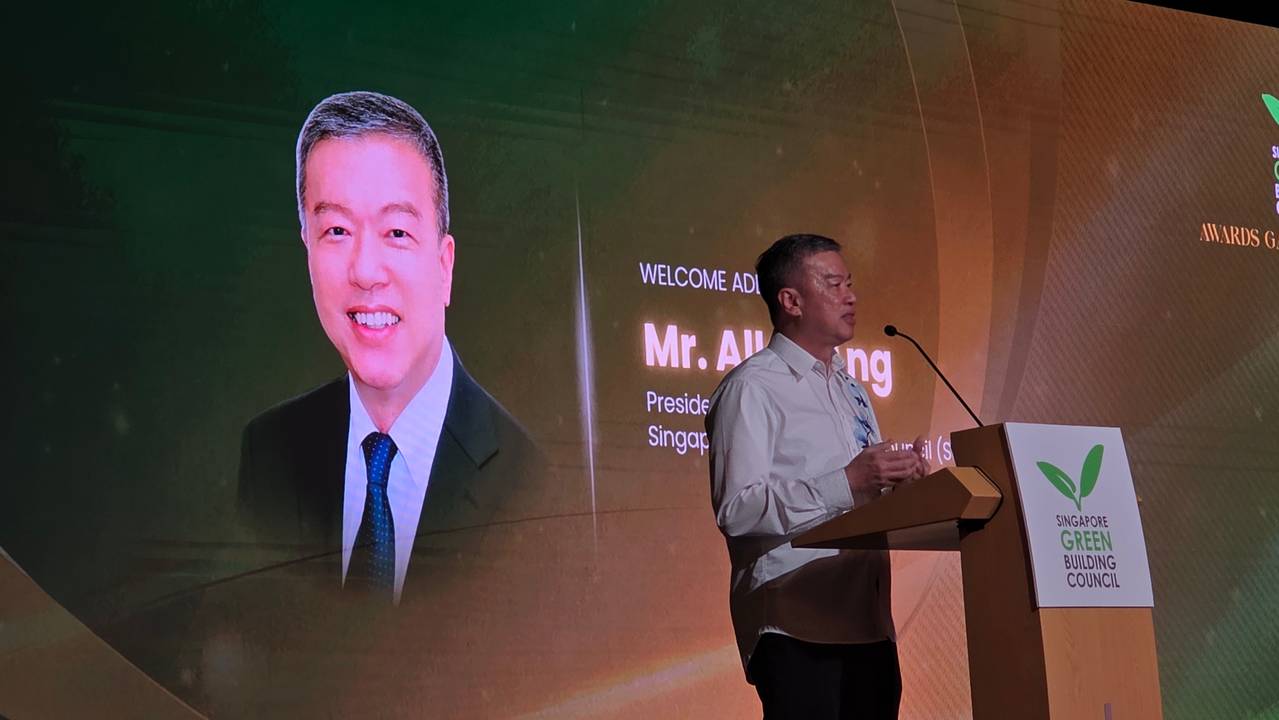
Mr. Allen Ang, President of the SGBC, commented, "The surge in nominations reflects a clear acceleration in the industry’s commitment to sustainability. Across professionals, businesses, and building projects, we are seeing deeper capabilities, more ambitious targets, and a growing recognition that sustainability is no longer a niche specialisation but a core competency for the entire built environment sector."
Expanding the Go 25 Movement
The Gala Dinner also marked the launch of the Go 25 Climate Appropriate Attire Guide by SGBC, the latest addition to its suite of Go 25 resources.
A study by Ngee Ann Polytechnic’s Centre for Environmental Sustainability showed energy savings of up to 12 percent for each degree raised in air-conditioning temperature from 23°C to 25°C in offices, and up to 28 percent in retail spaces, with no reported increase in occupant discomfort. Similarly, a study by BCA at its ZEB Plus building @ BCA Braddell Campus found that through hybrid cooling, cooling energy savings of 32% can be achieved when AC temperature is increased from 24°C to 26.5°C, without affecting occupant thermal comfort.
Since the campaign’s launch in May 2025, Go 25 has attracted more than 200 industry partners, with energy-efficiency pledges translating to at least $6.4 million in annual savings.
The Attire Guide joins the Go 25 Indoor Comfort Snapshot and the Go 25 Industry Guide for Building Operators in providing practical support for organisations making the shift to sustainable cooling, offering clear guidance on appropriate attire for Go 25 indoor settings and empowering building occupants to feel comfortable in environments set to 25 degrees Celsius.
As part of the Attire Guide’s recommendations, office workers should opt for lightweight cotton, linen, or blended dress shirts and polos. Choose easy-fitting, relaxed silhouettes that let air circulate, such as straight-cut trousers, easy-fit blouses, or unstructured jackets. A lightweight, unlined or half-lined blazer or cardigan can be kept on hand for cooler moments. Pair with breathable loafers, polished sneakers, or dress shoes with breathable linings.
The SGBC Awards Gala Dinner brought together over 800 industry leaders, policymakers, and sustainability practitioners to celebrate the achievements of the 2026 winners. During her speech, Minister Grace Fu said, “Building a green and climate-resilient future requires collective effort. The green building movement in Singapore has come a long way, and SGBC has contributed tirelessly to uniting key stakeholders and building strong capabilities across the sector.
“As the world grapples with a warmer environment and more frequent and extreme heatwaves, technology and know-how in building and running resource-efficient buildings represent a green growth opportunity. I am confident that with the continued commitment of our built environment sector, we will not only build a climate-ready home for Singaporeans but a competitive, future-ready sector.”