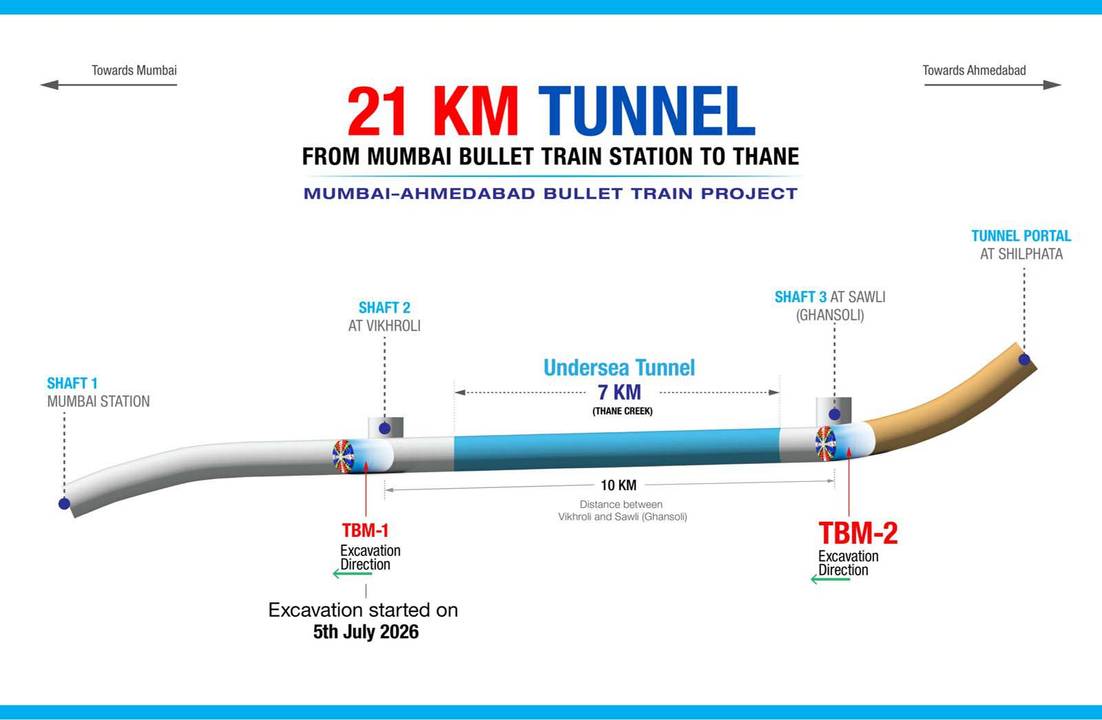
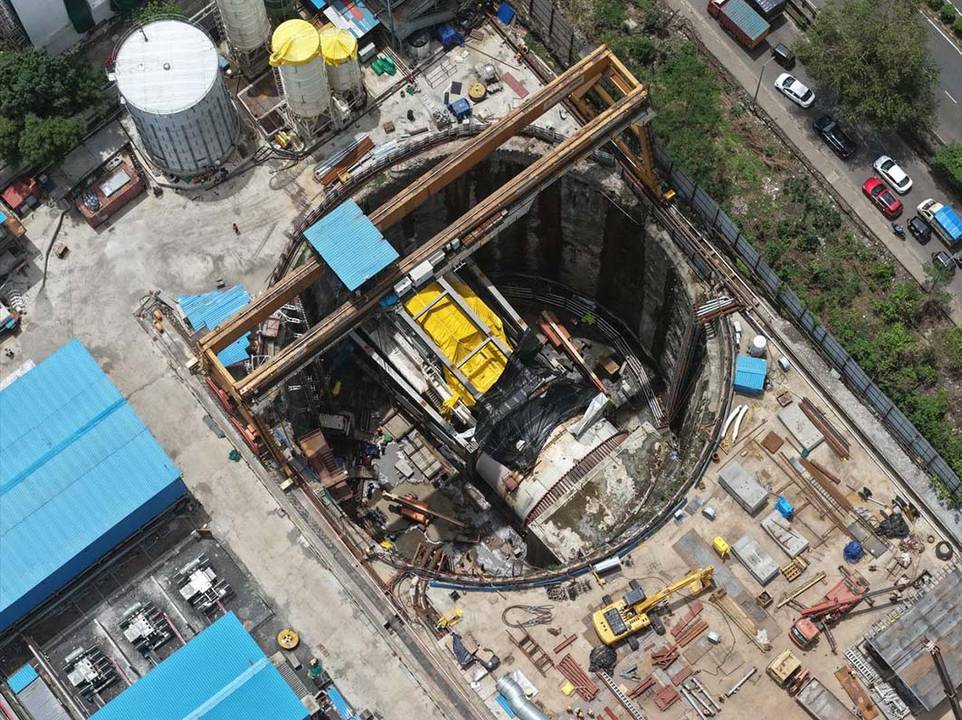
The second tunnel boring machine (TBM) has recently commenced tunnelling from Sawli (Ghansoli) towards Vikhroli in Maharashtra for the Mumbai-Ahmedabad Bullet Train Project. Of the 10-km stretch, 7 km will be an undersea tunnel beneath Thane Creek. This is set to be India’s first undersea tunnel for a rail corridor.
Of the total 21-km underground tunnel section, 16 km between Sawli (Ghansoli) and Bandra Kurla Complex (BKC) in Mumbai will be constructed using TBMs. The first machine began its 6-km drive from Vikhroli towards BKC on 5 July 2026. The remaining 5-km section has already been completed using the new Austrian tunnelling method (NATM).
‘One of the largest TBMs’
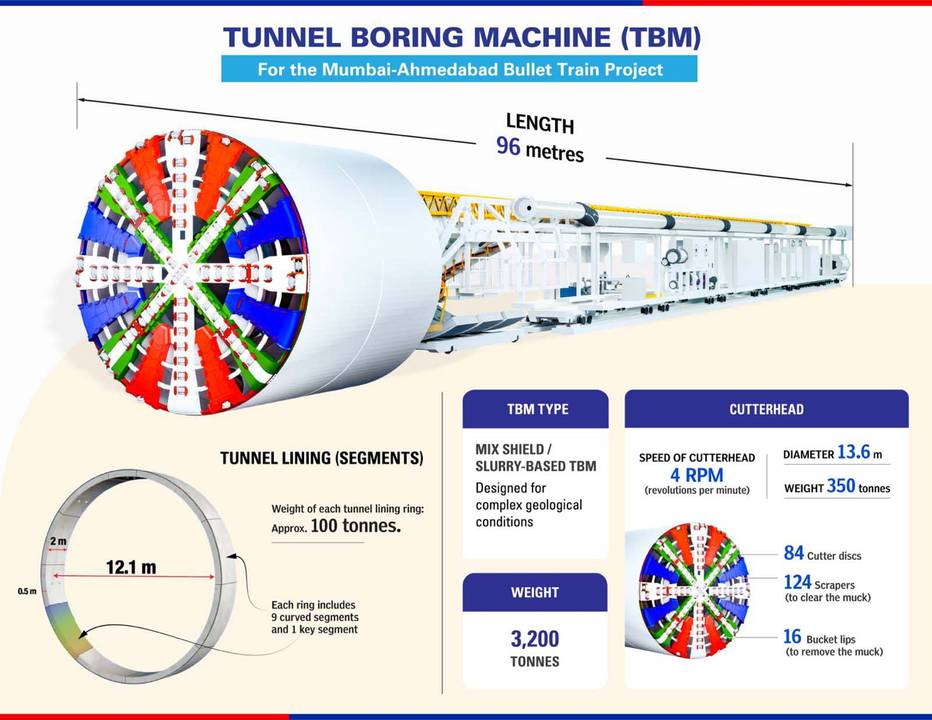
According to India’s National High Speed Rail Corporation Limited (NHSRCL), this second TBM is among the largest ever deployed for rail tunnel construction in the country. It features a massive cutterhead with a diameter of 13.6 m, weighs 3,200 t, and has a total length of 96 m.
The machine is configured as a semi-automatic, slurry-based mixshield TBM. The mixshield method utilises a pressurised liquid bentonite slurry circuit to actively stabilise the tunnel face during excavation, providing a highly reliable and proven technology for tunnelling through complex and challenging geological conditions.
This mixshield technology has been specifically adopted for tunnelling within the urban Mumbai suburban sector due to its superior capability to tightly control ground settlement and minimise surface disruption, said NHSRCL.
Integrated with a semi-continuous advance (SCA) system, the TBM allows segment ring-building operations and tunnel face excavation to proceed simultaneously and safely. This concurrent processing maximises the net advance rate, optimising the construction schedule to ensure accelerated work completion.
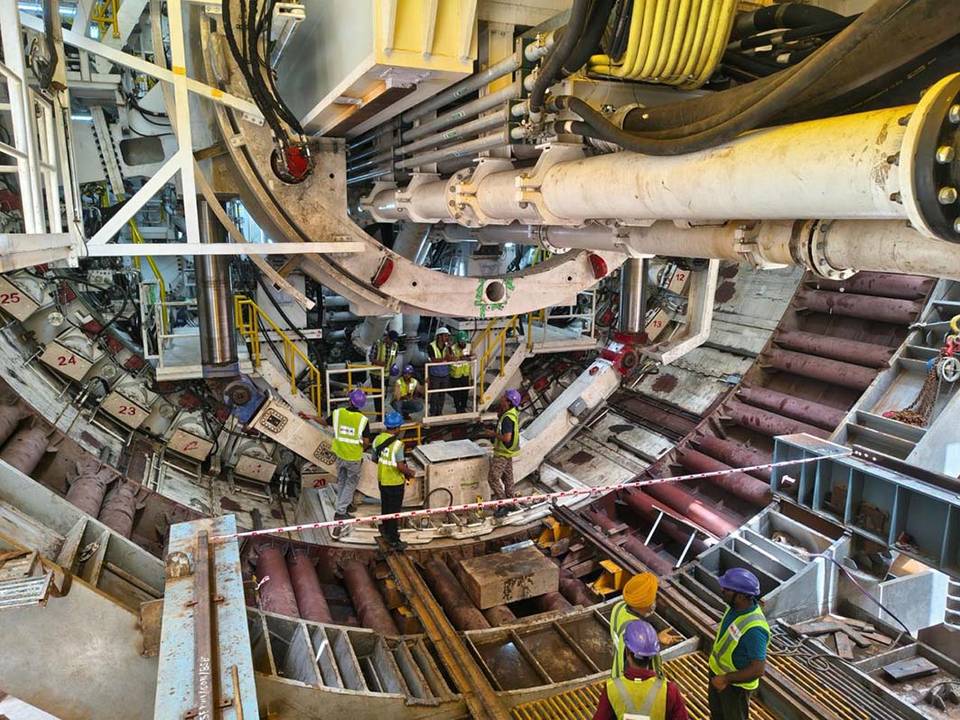
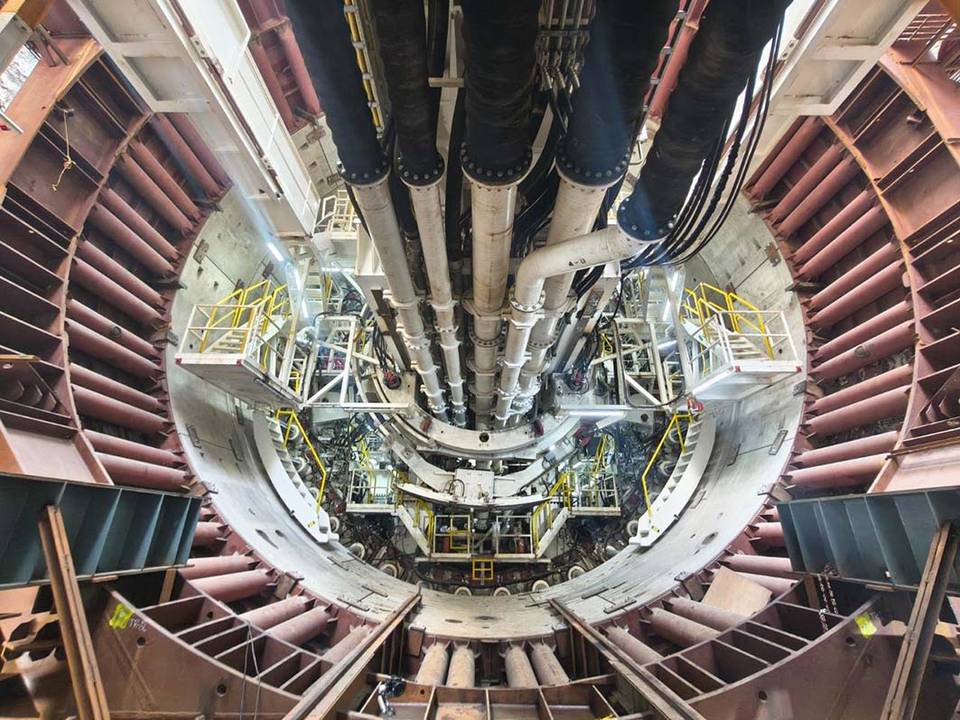
To facilitate the TBM launch, a 39-m deep shaft has been constructed at Sawli in Mumbai. To optimise the limited space available in the shaft, the machine was lowered in parts. The gantries were lowered first and pushed into the already constructed NATM tunnel, explained NHSRCL, adding that the main shield and cutterhead were then lowered.
A comprehensive real-time monitoring system has been installed to ensure safe tunnelling and protect nearby structures. The instruments used include surface settlement points (SSP), optical displacement sensors (ODS) / tilt meters, bi-reflective target (BRT/3D targets), strain gauges, and seismographs to monitor vibration and seismic waves.
The tunnel section excavated using TBMs is being designed as a fully waterproof structure. Continuous real-time monitoring systems for structural performance, groundwater behaviour, and overall construction safety are also being installed.
To prevent water ingress, the tunnel lining is protected using double-layer ethylene propylene diene monomer (EPDM) gaskets combined with hydrophilic seals, ensuring long-term structural durability and safety.
All images: NHSRCL